Financing Agreement for China-Kyrgyzstan-Uzbekistan Railway Project Signed in Bishkek
On December 16, a loan agreement was signed in Bishkek to finance the construction of the China-Kyrgyzstan-Uzbekistan (CKU) railway, an ambitious regional transport project intended to bolster connectivity across Central and South Asia. According to the Kyrgyz government, the agreement was concluded between China-Kyrgyzstan-Uzbekistan Railway Company LLC, a joint venture formed by the three participating countries and a syndicate of Chinese banks, including the China Development Bank and Eximbank. The CKU railway has been discussed for more than two decades, but repeatedly stalled over financing, route selection, and technical concerns. Momentum increased after 2022 as China sought alternative westbound transport corridors and Central Asian states looked to diversify trade routes and reduce reliance on existing transit pathways. The total cost of the railway project is estimated at $4.7 billion. Half of that amount, approximately $2.3 billion, will be provided as a 35-year loan from China to the joint project company, which will be responsible for repayment. The remaining $2.3 billion will be contributed to the company’s authorized capital: China will cover 51%, while Kyrgyzstan and Uzbekistan will each provide 24.5%. The CKU railway is a strategically significant infrastructure initiative spanning 523 kilometers. Construction officially began on December 27, 2024, in Kyrgyzstan’s Jalal-Abad region. Once completed, the railway will link Kashgar in China with Torugart, Makmal, and Jalal-Abad in Kyrgyzstan, and continue on to Andijan in Uzbekistan. A cargo transshipment station and logistics hub are planned in Makmal. The railway is expected to handle up to 15 million tons of cargo annually. Despite its strategic appeal, the project has raised concerns about debt exposure, particularly for Kyrgyzstan, which already relies heavily on Chinese financing. Officials say the joint-venture structure and long loan maturity will limit fiscal risks, though critics argue projected cargo volumes will need to be met for the railway to be financially sustainable. Currently, neither Kyrgyzstan nor Uzbekistan has a direct rail link with China; the only such connection in Central Asia runs through Kazakhstan. For Uzbekistan, the railway is expected to shorten transit times to Chinese markets and expand export capacity for industrial and agricultural goods. Officials in Tashkent have argued that the CKU route could reduce delivery times by several days compared with existing rail corridors. The CKU railway is among the most technically complex projects in the region. It includes the construction of 50 bridges and 29 tunnels, totaling 120 kilometers in length, meaning roughly 40% of the route will consist of bridges and tunnels. The Kyrgyz section alone will cover 304 kilometers. On December 5, Chairman of the Kyrgyz Cabinet of Ministers Adylbek Kasymaliev visited the construction site of one of the tunnels in the Jalal-Abad region to inspect progress. According to government sources, work has begun on 18 of the 29 planned tunnels and 17 of the 50 bridges. The project currently involves 5,695 pieces of machinery and over 5,000 workers. For Kyrgyzstan, the CKU railway represents the largest infrastructure project in the country’s history. Authorities view the project as a chance to transform the country into a regional transit hub while generating employment, transit revenue, and long-term economic spillovers. Once operational, the CKU railway is expected to integrate with broader transport networks linking China to Central Asia, the Middle East, and Europe, reinforcing the region’s role as a key overland transit corridor amid shifting global trade patterns.

Pannier and Hillard’s Spotlight on Central Asia: New Episode Available Now
As Managing Editor of The Times of Central Asia, I’m delighted that, in partnership with the Oxus Society for Central Asian Affairs, from October 19, we are the home of the Spotlight on Central Asia podcast. Chaired by seasoned broadcasters Bruce Pannier of RFE/RL’s long-running Majlis podcast and Michael Hillard of The Red Line, each fortnightly instalment will take you on a deep dive into the latest news, developments, security issues, and social trends across an increasingly pivotal region. This week, we're unpacking Turkmenistan's Neutrality Summit, a rare moment where a string of big names quietly rolled into Ashgabat, and where the public messaging mattered just as much as the backroom deals. We'll also cut through the noise on the latest reporting from the Tajik–Afghan border, where misinformation is colliding with real security developments on the ground. From there, we'll take a hard look at the results of Kyrgyzstan's elections, what they actually tell us about where Bishkek is heading next, and what they don't, before examining the looming power rationing now shaping daily life and political pressure in two Central Asian states. And to wrap it up, we're joined by two outstanding experts for a frank conversation on gendered violence in Central Asia: what's changing, what isn't, and why the official statistics may only capture a fraction of the reality. On the show this week: Daryana Gryaznova (Equality Now) Svetlana Dzardanova (Human Rights and Corruption Researcher)

Bishkek to Host Second B5+1 Forum of Central Asia and the U.S.
Kyrgyzstan is preparing to host the second B5+1 Forum of Central Asia and the United States, scheduled for February 4-5, 2026, in Bishkek. On December 12, Kyrgyzstan’s Ministry of Foreign Affairs and Ministry of Economy and Commerce held a joint briefing for ambassadors from Central Asian countries and the United States to outline preparations for the event. The B5+1 platform serves as the business counterpart to the C5+1 diplomatic initiative, which unites the five countries of Central Asia – Kazakhstan, Kyrgyzstan, Tajikistan, Turkmenistan, and Uzbekistan – with the United States. Launched by the Center for International Private Enterprise (CIPE) under its Improving the Business Environment in Central Asia (IBECA) program, B5+1 is supported by the U.S. Department of State and aims to foster high-level engagement between business leaders and policymakers. The upcoming forum in Bishkek builds on the outcomes of the C5+1 Summit held in Washington on November 6 this year. Its objective is to deepen U.S.-Central Asia economic cooperation and highlight the private sector’s pivotal role in advancing economic reform across the region. The event is co-hosted by CIPE and the Kyrgyz government. According to organizers, the forum’s agenda will focus on key sectors including agriculture, e-commerce, information technology, transport and logistics, tourism, banking, and critical minerals. These thematic areas reflect emerging regional priorities and shared interests in enhancing sustainable growth and economic resilience. The B5+1 Forum aims to create a platform for sustained dialogue between governments and private sector actors, encouraging the development of long-term partnerships and policy coordination. The inaugural B5+1 Forum was held in Almaty in March 2024, and brought together over 250 stakeholders from all five Central Asian countries and the United States. The first event centered on regional cooperation and connectivity, with a strong emphasis on empowering the private sector to support the objectives of the C5+1 Economic and Energy Corridors.
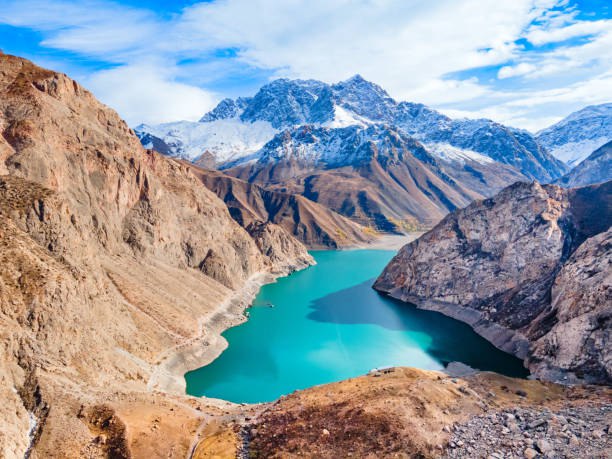
Glacier Melt Threatens Central Asia’s Water Security, Experts Warn at Regional Forum
The accelerating retreat of glaciers poses a serious risk to water security across Central and West Asia, scientists and journalists warned during an online media forum jointly hosted by the Asian Development Bank (ADB) and the International Centre for Integrated Mountain Development (ICIMOD) on December 10, according to Asia-Plus. The forum focused on the growing impact of glacial melt in mountain regions, including the Pamirs, Tien Shan, Hindu Kush, and Himalayas, where shrinking ice reserves are increasingly disrupting water supplies for agriculture, energy, and drinking water. A key highlight was the ADB’s Glacier to Farms (G2F) program, presented by senior climate adaptation specialist Chris Dickinson. The initiative, spanning nine countries including Tajikistan, Uzbekistan, Armenia, and Georgia, aims to link glacier monitoring with practical, climate-resilient policy measures. Unlike past approaches that primarily diagnosed the problem, G2F offers technical and financial solutions designed to support communities in adapting to climate change. The $3.5 billion initiative, backed in part by $250 million from the Green Climate Fund, leverages a co-financing model that aims to attract $10 in additional investment for every dollar committed. The program envisions a full climate adaptation chain from satellite-based glacier monitoring and mountain observation stations to downstream interventions such as crop insurance, farmer support, and modernization of water infrastructure. “Glaciers are the origin of the entire food and water system,” Dickinson said. “Their rapid retreat threatens lives and livelihoods far beyond mountain regions.” Tajikistan serves as a pilot site for the program due to its heavy reliance on hydropower and its largely mountainous terrain. One of the project's key goals is to enhance the country’s hydrometeorological services and strengthen monitoring of snow cover, glacier movement, landslides, and related hazards. A modern early warning system is being developed for the Panj River basin, combining data on glacial lakes, mudflows, precipitation, and seismic activity. The alerts will be sent to vulnerable communities via mobile networks, complemented by local training programs to ensure proper responses. Forum participants noted that the effects of glacial retreat are already evident. Glaciers in the Tien Shan and Pamir ranges feed the Amu Darya and Syr Darya rivers, vital water sources for Central Asia’s agriculture, energy, and drinking needs. An estimated 74% of the Amu Darya’s flow comes from snow and glacier melt. In the Indus basin, the figure is about 40%. Yet only a small number of the region’s more than 54,000 glaciers are regularly monitored, leaving gaps in early warning systems and long-term planning. Experts from ICIMOD and ADB described glacier melt as a “cascading crisis.” Rising temperatures are fueling more frequent landslides, floods, and mudflows, while droughts reduce crop yields and damage pastures. Glacial lake outburst floods, sudden and destructive releases of water, pose grave risks to nearby settlements. Since the 19th century, the region has recorded around 500 such incidents, and their frequency could triple by the end of this century. Heatwaves and water quality issues further compound the risks. Recent glacial activity in Tajikistan underscored the forum’s urgency. In October, a massive segment of a glacier broke off Mount Ismoil Somoni in the Tajikabad district, near the village of Safedobi. The ice mass measured approximately two kilometers in length, up to 25 meters in height, and between 150 and 200 meters wide. It slid into a gorge, but emergency services quickly stabilized the situation, with no casualties reported. In a separate incident, a large portion of the Didal Glacier in the same district detached and slid more than five kilometers downslope. Experts from Tajikistan’s Center for Glaciology reported that the ice continued to shift for several days and remained unstable. Field teams measuring the glacier in the Surkhob River basin found it to be 1.5 kilometers long, 200 meters wide, and up to 50 meters high. Research shared by ICIMOD and Norway’s Water Resources and Energy Directorate revealed that Central Asia accounts for roughly 8.5% of global glacier mass loss, one of the highest regional shares worldwide. Miriam Jackson, an ICIMOD representative, warned that if global temperatures rise by 1.9°C, the region could lose up to 50% of its glaciers, significantly worsening pressure on already strained water supplies.

“I Miss Everything:” Friends, Officials Mourn Uzbek Student Slain in the U.S.
MukhammadAziz Umurzokov, one of two students killed by a gunman at Brown University on Dec. 13, seemed to be making the most of life after moving to the United States from Uzbekistan with his family some years ago. He hoped to become a neurosurgeon, according to a sister, and his acceptance into the elite university in Rhode Island signaled that he was on the way to achieving his goals. So, the killing of Umurzokov, along with that of student Ella Cook of Alabama, hit hard for some people who, though accustomed to periodic news of mass shootings in the United States, were especially saddened that lives of such promise ended in violence. In Umurzokov’s case, he was mourned from the halls of power and diplomacy in the Uzbek capital of Tashkent to the suburbs of Richmond, Virginia, where he went to high school. “The loss of innocent lives as a result of this tragedy is a heavy loss for all of us,” Akhror Burkhanov, press secretary for Uzbekistan’s Ministry of Foreign Affairs, said on X. “Representatives of the missions of the Republic of Uzbekistan in the United States are in constant contact with the relatives of the deceased and are working closely with the relevant U.S. agencies on all issues.” Jonathan Henick, the U.S. ambassador to Uzbekistan, also expressed his sadness over the killings at Brown. “We extend our sincere condolences to Mr. Umurzokov’s family, friends, and fellow students and mourn the loss of his bright future,” Henick said in a statement. He added the Uzbek-language phrase: “Marhumni Xudo rahmat qilsin” (May God have mercy on the deceased). The Uzbek American Association issued a tribute to the Uzbek student, saying: “His passing has left an immeasurable void in the hearts of his family, friends, classmates, and the broader Uzbek American community.” Some comments from old friends in the United States suggested that Umurzokov, as a member of the Uzbek diaspora, was integrated into the rhythms of American life. “I miss everything,” Jameson Huang said on the GoFundMe page that was set up by Umurzokov’s sister, Samira Umurzokova. “Let’s catch up one day in Publix, drinking Arizonas and eating mac and cheese. Let’s race our cars and see who’s faster. Let’s redo the chaos of the college application cycle and the late night calls and hangouts. One day man, one day. For now, rest easy and stay safe up there.”

Opinion: Is Uzbekistan Importing a Future Crisis?
Once hidden from the view of international investors, Uzbekistan is rapidly rewriting its economic narrative. Over the past eight years, the nation attracted over $113 billion in foreign investment, drawing financial firms and mutual funds eager to seize the momentum of Tashkent’s trade liberalization and its ambition to double GDP by 2030. And rightly so; 40% of the country’s population, which is the largest in Central Asia, is under the age of 25, while its gold production is within the top ten globally. Uzbekistan is in its breakout moment. With Uzbek bonds receiving a further upgrade to a BB rating from both Fitch and S&P Global, comparisons to Vietnam or Indonesia no longer seem aspirational. However, the question remains: Is Uzbekistan ready to set foot on the financial global stage, and, more importantly, is it structurally equipped to stay there? Amidst its sweeping economic transformation, IMF officials have warned the administration to remain vigilant against economic shocks beyond its control: volatile commodity prices, contractions in foreign investor liquidity, and consequently, tighter external financing. These warnings are not theoretical. They come from decades of IMF experience with financial crises in other emerging markets, such as the Latin American debt crises in the 1980s, the “Tequila Crisis” in 1994, and the “Asian Flu” in 1997. In those historic cases, newly liberalized economies suffered not because they lacked growth, but because they lacked a defense against the liquidity cycle. The economic reality is that global capital flows are often driven by decisions made in New York or London, not Tashkent. This economic phenomenon is often explained by the “liquidity model,” which argues that changes in exogenous liquidity conditions - driven by the economic situation of investor countries - shape capital flows into emerging markets. Thus, without sufficient financial market depth, emerging capital markets cannot absorb external shocks. And when global liquidity tightens, these flows can abruptly reverse, resulting in prolonged economic instability and loss of monetary sovereignty. The sequence unfolds as follows: capital inflows surge and balance-sheet vulnerabilities quietly build up; then an external shock - such as a monetary tightening in the creditor economy - causes inflows to slow; the local currency depreciates; and a feedback spiral of declining confidence and weakening balance sheets pushes the economy into crisis. Currency loses trust, struggles to recover, and money flees. Some initial signs of this pattern can be observed in Uzbekistan’s current boom. The economy is increasingly reliant on foreign borrowing: external debt as a share of GDP rose from 24.7% in 2017 to 61.4% in 2024, reaching $78.5 billion by June 2025. According to CEIC benchmarks, this level is already comparable to Poland’s 51.8% and Malaysia’s 69.9%, and now exceeds Kazakhstan’s 59.2%, reflecting growing dependence on financing from the World Bank, Eurobond investors, and major East Asian institutions. High debt levels alone do not necessarily imply instability. They can reflect efforts to accelerate domestic development. The real source of fragility in past crises was not the volume of debt but its denomination. When obligations are in foreign currencies, a country becomes acutely sensitive to the economic conditions of its lenders. To illustrate, if the Uzbek Som were to depreciate suddenly due to a commodity price shock, such as a drop in gold, the public would likely rush to buy dollars, creating a feedback loop that weakens the currency even further. Simultaneously, the cost of servicing foreign debt would spike, as every dollar of repayment would require more Som. Today, approximately 60% of Uzbekistan's government debt is denominated in U.S. dollars. To ensure rapid recovery from inevitable external shocks, Tashkent must shift its strategy from pure growth to structural resilience. This requires building fiscal buffers now to allow for counter-cyclical spending during downturns, rigorously stress-testing the banking sector to prevent systemic credit freezes, and maintaining a flexible exchange rate to act as a natural safety valve against global volatility. Is Uzbekistan importing a future financial crisis? In practice, no country can be fully immunized against global volatility. Yet, history has proven that the FDI model is indispensable for rapidly improving the standards of living for citizens. The question is not if Uzbekistan should take the money, but how it manages the flow and prepares for the worst-case scenario. The views expressed in this article are those of the author and do not necessarily reflect the official policy or position of the publication, its affiliates, or any other organizations mentioned.

Uzbek Student Among Two Killed in Brown University Shooting
Two students were killed, and nine others were injured in a shooting on the campus of Brown University in Providence, Rhode Island, a tragic event that has drawn international attention. Uzbekistan’s Ministry of Foreign Affairs has confirmed that one of the deceased was an Uzbek national. The shooting occurred overnight on December 13-14 at the Ivy League institution. The death of Muhammad Aziz Umurzoqov was first reported by family members through a fundraising appeal on the GoFundMe platform and later officially confirmed by the press secretary of Uzbekistan’s Foreign Ministry. In the GoFundMe statement, Umurzoqov was remembered as a kind, intelligent, and compassionate young man who dreamed of becoming a neurosurgeon. “He always lent a helping hand to anyone in need without hesitation,” the family wrote. As of 10:30 a.m. Uzbekistan time on December 15, donations had reached $171,326. The family stated that a portion of the funds would be donated to charity in his name. Initial reports from CNN, citing law enforcement sources, indicated that a 24-year-old man from Wisconsin had been detained in connection with the incident. However, Brown University later clarified that the man had been released. In an official statement, the university said Providence police had found “no basis” to consider him a person of interest, a conclusion also confirmed by the Rhode Island Attorney General. Brown University confirmed that two students were fatally shot, while nine others sustained injuries ranging from minor to critical. Law enforcement authorities have stated there is no immediate threat to the campus or surrounding community, though the investigation remains ongoing. Providence police are leading the investigation in coordination with local, state, and federal agencies. In response, Brown University has significantly increased its on-campus police presence, with the Department of Public Safety more than doubling its staff. Authorities have established a dedicated tip line and urged anyone with relevant information to contact the Providence Police Department. University officials have reiterated their commitment to campus safety and urged students, faculty, and staff to remain alert as the investigation progresses.

Uzbekistan Announces New Electricity Rationing Amid Power Shortages
Uzbekistan has announced a new electricity rationing schedule as power shortages strain the national grid. The Ministry of Energy said temporary evening outages would help stabilize supply while repairs and emergency measures continue. The outages, which began this week, are concentrated during peak hours between 5:00 p.m. and 9:00 p.m. and are expected to last until mid-January.
Causes of the Shortfall
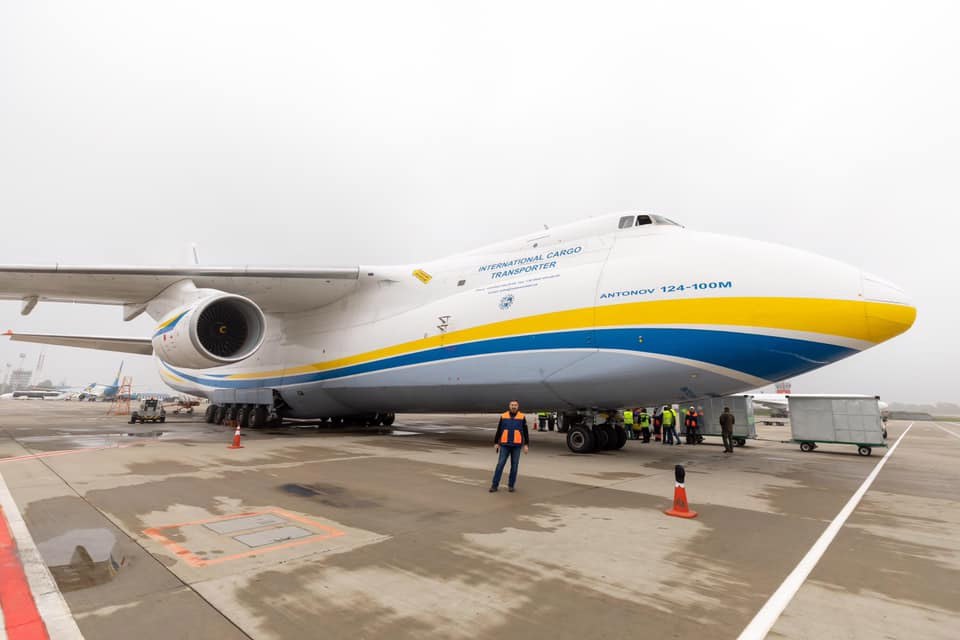
The crisis stems from a major failure at the Syrdarya thermal power plant, one of the country’s largest. A newly installed Mitsubishi gas turbine suffered a mechanical fault in late November, forcing the station to shut down part of its capacity. A replacement 114-ton rotor was delivered by air on December 8, and engineers expect to finish installation and testing in four weeks. Seasonal factors have also reduced the available power supply. With winter’s shorter daylight hours, output from solar stations has dropped significantly, increasing the load on the grid. An unexpected gas supply disruption has further strained generation: Energy Minister Jurabek Mirzamakhmudov revealed that an accident in a neighboring country’s network cut Uzbekistan’s gas intake by about 6 million cubic meters per day. Natural gas fuels a large share of the country’s power plants, so this drop in fuel supply, combined with cloudy weather, has constrained electricity production. “Because of rain, there was neither wind nor sun,” Mirzamakhmudov said. These factors combined have left the grid struggling to meet peak demand in early December.Peak-Hour Outages to Balance Demand
Officials have emphasized that rolling blackouts will be kept brief and targeted; each outage is not expected to last more than about two hours, and consumers will be notified in advance whenever possible. By shedding some load at peak times, the grid can avoid more dangerous unplanned breakdowns and ensure critical facilities remain powered. Residents have also been urged to use electricity sparingly and to monitor official announcements, rather than panic if an interruption occurs.
The Energy Ministry has stressed that rumors of any nationwide “blackout” are unfounded, and any power cuts will be localized and limited in scope, not a return to the wide-ranging outages seen in the past. Citizens have been cautioned against spreading unverified information on social media and encouraged to rely on updates from authorities.
Winter Energy Challenges and Reforms
Winter months have historically tested Uzbekistan’s energy infrastructure. In previous years, electricity deficits forced scheduled outages – commonly known as rolling blackouts – across the country. However, officials note that the situation has improved markedly due to new power projects and efficiency measures. According to Energy Ministry data, the volume of electricity consumption that had to be curtailed through such restrictions fell from about 4 billion kWh in 2013 to just 357 million kWh in 2024. Even during the Central Asian energy crisis of winter 2022, Uzbekistan’s forced power cuts totaled around 2 billion kWh, a figure that has since sharply declined as new capacity comes online.
Uzbekistan has been racing to expand its electricity generation to meet growing demand and reduce chronic winter shortages. The government has partnered with international firms to build modern gas-fired plants and large renewable energy projects. As a result, wind and solar power output have surged. The country’s solar and wind farms generated a record 10 billion kilowatt-hours of electricity this year, saving an estimated 2.7 billion cubic meters of natural gas that would otherwise have been burned for power. Still, these gains can be hampered by seasonal conditions: on cold, overcast days, when new solar panels and wind turbines yield less energy. By announcing targeted evening rationing now, the authorities hope to manage the current shortfall in a controlled way and avoid a repeat of the widespread outages that have plagued past winters.
Sunkar Podcast
Central Asia and the Troubled Southern Route