
From Culture to Critical Minerals: C5+1 Opens Busy U.S. Week in Central Asia
The United States and Central Asia moved another part of the C5+1 agenda into a working-level form on June 5, when culture officials from the five Central Asian states and Washington met in Tashkent. The meeting came just days before a separate C5+1 critical minerals session in Astana, giving the week a wider agenda: cultural heritage, public diplomacy, mining, investment, and supply chains are now moving forward in the same regional format.
The Tashkent meeting brought together Uzbekistan's Minister of Culture Ozodbek Nazarbekov, Kazakhstan's Minister of Culture and Information Aida Balayeva, Kyrgyzstan's Minister of Culture, Information and Youth Policy Mirbek Mambetaliev, Tajikistan's Minister of Culture Matluba Sattoriyon, Turkmenistan's Deputy Minister of Culture Gurbanmurad Miradaliev, and Sarah Rogers, the U.S. Under Secretary of State for Public Diplomacy and Public Affairs. The agenda covered cultural and humanitarian cooperation, joint cultural projects, creative exchanges, and the protection and promotion of cultural heritage.
Participants discussed a permanent C5+1 Working Group on Culture, a C5+1 Culture and Innovation Forum, closer cooperation in the creative industries, and more places for Central Asian cultural professionals in U.S. education and exchange programs. Uzbekistan also proposed joint English for Culture centers with U.S. partners at cultural education institutions.
In practical terms, that could mean joint training for museum staff, touring exhibitions, film and music exchanges, English-language programs for curators and cultural managers, and U.S.-backed workshops for people working in heritage, tourism, and the creative industries. For Uzbekistan, the proposed centers would give the agenda a physical base inside cultural education institutions rather than leaving it at the level of declarations.
The meeting ended with a protocol, which reaffirmed the parties' commitment to the cultural heritage agenda adopted after the Washington summit in November 2025. The International Institute for Central Asia said it covered cooperation through joint events and festivals in art, literature, theater, cinema, and music. Kazakhstan's side also tied the discussion to museum partnerships, digitization of heritage, professional exchanges, tourism routes, and digital projects.
The Tashkent talks grew out of the C5+1 leaders’ meeting in Washington, where culture joined a wider list of priorities. That summit marked ten years of U.S. engagement with the region through the format, which began in 2015 and has since expanded from foreign-minister meetings to expert groups and presidential-level summits. The Times of Central Asia previously reported that the November 2025 summit shifted the format from broad diplomacy toward deliverable agreements, with critical minerals, aviation, supply chains, and business ties among the main areas of focus.
Culture fits into that agenda, as Central Asian governments see heritage, tourism, film, music, museums, and the creative industries as economic sectors as well as identity markers. For the United States, public diplomacy gives Washington a way to stay active in the region outside security and energy talks. It also gives the C5+1 a soft-power layer, using language programs, museum links, heritage projects, and creative exchanges to build influence without framing the relationship only around security or resources.
Heritage protection has a security side as well. Trafficking in cultural property often overlaps with border management, customs work, and law enforcement. Digital records, shared museum practices, and professional training can help countries document sites and objects before they are damaged, stolen, or moved abroad. Turkmenistan's coverage of the meeting noted attention to museums, research centers, digitization, and the U.S. Ambassador's Fund for Cultural Preservation, which has supported restoration and preservation projects in the region.
A current example is the Sher-Dor Madrasah in Samarkand, where Rogers, Uzbekistan Art and Culture Development Foundation Chairperson Gayane Umerova, and U.S. Ambassador Jonathan Henick marked the completion of the first phase of an AFCP-backed façade restoration project on June 3. The same event also produced a five-year cooperation roadmap between the foundation and the U.S. Embassy covering culture and heritage preservation.
[caption id="attachment_50061" align="aligncenter" width="1774"]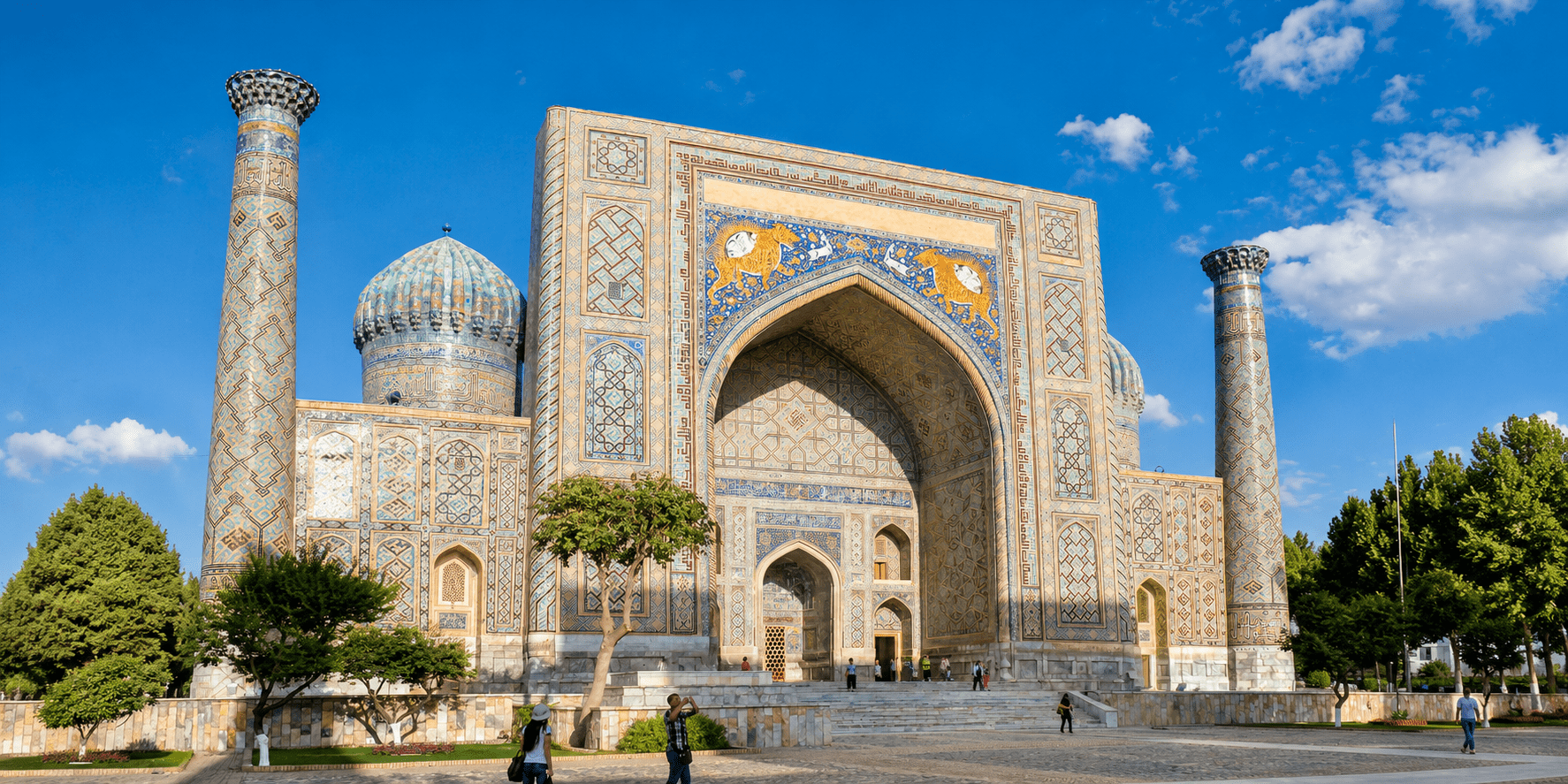 The Sher-Dor Madrassa; image: TCA, Stephen M. Bland[/caption]
The American calendar goes beyond culture. Rogers is on a May 27-June 10 regional trip with stops including Uzbekistan and Turkmenistan. In Tashkent, she also met Foreign Minister Bakhtiyor Saidov for talks on education, culture, information exchange, and public diplomacy. That placed the C5+1 culture meeting inside a larger set of bilateral and regional conversations.
The next stop for the format is Astana. The current AMM 2026 program lists C5+1 Critical Minerals Dialogue activity on June 10, immediately before the Astana Mining & Metallurgy Congress on June 11-12, which will bring Kazakhstan’s critical minerals sector, investment agenda, and role in global supply chains into sharper focus. The official program includes panels on investment conditions, taxation, transport and logistics, copper as a strategic metal, and the move from mineral resources to investment projects.
The program also lists B2B and B2G meetings, as well as a June 13 industrial tour to a Qarmet enterprise, giving the congress a direct business-development and site-visit component.
Those panels point to the kind of work investors usually need before projects move forward: clearer tax terms, transport routes for getting ore and processed metals to market, bankable project lists, and agreements on where processing will take place. Copper is a useful example because it links mining directly to power grids, electric vehicles, data centers, and other parts of the global energy transition.
Kazakhstan has strong reasons to host this event as it seeks more processing inside the country, more foreign capital, and better access to high-value industrial chains. The AMM organizers say the congress will place Central Asia's role in global supply chains of strategic resources at the center of the discussions. The exhibition plans participation from companies and groups from Kazakhstan, Canada, China, Germany, Saudi Arabia, Sweden, the United States, and others.
The scale is already significant. The International Trade Administration says Kazakhstan accounted for 39% of global uranium production and 48.8% of global natural uranium exports, while hard minerals and metals made up 18% of the country’s exports by value in 2024. Refined copper exports alone generated $2 billion that year, with zinc exports at $788 million and silver at $588 million.
Kazakhstan is also trying to turn early-stage rare earth potential into bankable projects. In 2025, Kazakh officials announced the discovery of the Zhana Kazakhstan rare earth deposit, with estimated resources of more than 20 million metric tons and containing neodymium, cerium, lanthanum, and yttrium, though Reuters reported that no developer or timeline had yet been specified.
For Washington, critical minerals have become one of the strongest economic reasons to keep the C5+1 format moving. The United States wants supply chains that are less vulnerable to political pressure, export controls, and transport bottlenecks. Central Asian governments want technology, finance, new routes to markets, and a larger share of the value from their own resources. The format also suits the region’s multi-vector approach: it gives all six governments involved a common forum, while each Central Asian state keeps working bilaterally with other partners.
Kazakhstan enters the critical minerals race with an advantage many countries lack: an industrial base already in place. The country has substantial mining, smelting, and metallurgical capacity, active geological exploration, growing technical and laboratory infrastructure, and long-running partnerships with international energy and mining companies, including Chevron’s presence through Tengizchevroil since 1993. The next step is to expand domestic processing, attract more investment in critical minerals, and capture more of the value chain inside the country. For U.S. companies, that means looking beyond access to raw materials and assessing where refining, logistics, equipment supply, geological services, environmental technologies, and long-term offtake agreements could fit.
The sequence building up to Astana shows how the format is changing. Leaders set broad priorities in Washington last November. Ministers and sector officials are now turning those priorities into practical areas of work. Culture may produce working groups, exchanges, festivals, and digitization projects, while minerals may produce project lists, roundtables, investment contacts, and long-term purchase talks.
That does not mean all proposals will become funded programs, but it does show that the C5+1 is becoming more regular and more specific. For Central Asia and the United States, that is the point. After the meetings, the real measure will be whether funded programs, signed contracts, and regular work continue after the summit photos have faded.
The Sher-Dor Madrassa; image: TCA, Stephen M. Bland[/caption]
The American calendar goes beyond culture. Rogers is on a May 27-June 10 regional trip with stops including Uzbekistan and Turkmenistan. In Tashkent, she also met Foreign Minister Bakhtiyor Saidov for talks on education, culture, information exchange, and public diplomacy. That placed the C5+1 culture meeting inside a larger set of bilateral and regional conversations.
The next stop for the format is Astana. The current AMM 2026 program lists C5+1 Critical Minerals Dialogue activity on June 10, immediately before the Astana Mining & Metallurgy Congress on June 11-12, which will bring Kazakhstan’s critical minerals sector, investment agenda, and role in global supply chains into sharper focus. The official program includes panels on investment conditions, taxation, transport and logistics, copper as a strategic metal, and the move from mineral resources to investment projects.
The program also lists B2B and B2G meetings, as well as a June 13 industrial tour to a Qarmet enterprise, giving the congress a direct business-development and site-visit component.
Those panels point to the kind of work investors usually need before projects move forward: clearer tax terms, transport routes for getting ore and processed metals to market, bankable project lists, and agreements on where processing will take place. Copper is a useful example because it links mining directly to power grids, electric vehicles, data centers, and other parts of the global energy transition.
Kazakhstan has strong reasons to host this event as it seeks more processing inside the country, more foreign capital, and better access to high-value industrial chains. The AMM organizers say the congress will place Central Asia's role in global supply chains of strategic resources at the center of the discussions. The exhibition plans participation from companies and groups from Kazakhstan, Canada, China, Germany, Saudi Arabia, Sweden, the United States, and others.
The scale is already significant. The International Trade Administration says Kazakhstan accounted for 39% of global uranium production and 48.8% of global natural uranium exports, while hard minerals and metals made up 18% of the country’s exports by value in 2024. Refined copper exports alone generated $2 billion that year, with zinc exports at $788 million and silver at $588 million.
Kazakhstan is also trying to turn early-stage rare earth potential into bankable projects. In 2025, Kazakh officials announced the discovery of the Zhana Kazakhstan rare earth deposit, with estimated resources of more than 20 million metric tons and containing neodymium, cerium, lanthanum, and yttrium, though Reuters reported that no developer or timeline had yet been specified.
For Washington, critical minerals have become one of the strongest economic reasons to keep the C5+1 format moving. The United States wants supply chains that are less vulnerable to political pressure, export controls, and transport bottlenecks. Central Asian governments want technology, finance, new routes to markets, and a larger share of the value from their own resources. The format also suits the region’s multi-vector approach: it gives all six governments involved a common forum, while each Central Asian state keeps working bilaterally with other partners.
Kazakhstan enters the critical minerals race with an advantage many countries lack: an industrial base already in place. The country has substantial mining, smelting, and metallurgical capacity, active geological exploration, growing technical and laboratory infrastructure, and long-running partnerships with international energy and mining companies, including Chevron’s presence through Tengizchevroil since 1993. The next step is to expand domestic processing, attract more investment in critical minerals, and capture more of the value chain inside the country. For U.S. companies, that means looking beyond access to raw materials and assessing where refining, logistics, equipment supply, geological services, environmental technologies, and long-term offtake agreements could fit.
The sequence building up to Astana shows how the format is changing. Leaders set broad priorities in Washington last November. Ministers and sector officials are now turning those priorities into practical areas of work. Culture may produce working groups, exchanges, festivals, and digitization projects, while minerals may produce project lists, roundtables, investment contacts, and long-term purchase talks.
That does not mean all proposals will become funded programs, but it does show that the C5+1 is becoming more regular and more specific. For Central Asia and the United States, that is the point. After the meetings, the real measure will be whether funded programs, signed contracts, and regular work continue after the summit photos have faded.

Pannier and Hillard’s Spotlight on Central Asia: New Episode Out Now
As Managing Editor of The Times of Central Asia, I’m delighted that, in partnership with the Oxus Society for Central Asian Affairs, from October 19, we are the home of the Spotlight on Central Asia podcast. Chaired by seasoned broadcasters Bruce Pannier of RFE/RL’s long-running Majlis podcast and Michael Hillard of The Red Line, each fortnightly instalment will take you on a deep dive into the latest news, developments, security issues, and social trends across an increasingly pivotal region. This week, the team covers the latest Eurasian Economic Union talks, a new defence deal between Moscow and a very unlikely ally, Kazakhstan putting itself forward to play a major role in the Iran nuclear talks, Turkmenistan once again conscripting public servants into forced labour, new developments in the Tashiev trial, and a major crackdown on madrasas and religious institutions in southern Kyrgyzstan. Before then turning to our main story this week, where Kyrgyzstan has just won itself a non-permanent seat on the United Nations Security Council, a major diplomatic breakthrough for the country, and a massive development for Central Asia more broadly. Special guest: Kadyr Toktogul (Fmr. Kyrgyz Ambassador to the United States and Canada)

Megaprojects Instead of Quotas: How Central Asia’s Water Diplomacy Is Changing
Central Asia’s water politics are moving beyond Soviet-era quotas. As glaciers in the Tien Shan retreat and climate pressure increases, river management has become a question of energy security, food production, and regional stability. The Soviet-era system of river-water allocation has reached its limits, forcing Central Asian states to look beyond traditional negotiations and toward joint ownership of strategic water infrastructure. Even as regional governments learn to cooperate more closely, a new challenge is emerging on Central Asia’s southern frontier, one that could disrupt the region’s hydrological balance. The Illusion of Control Formally, Central Asia’s water resources are governed through a network of interstate institutions. The principal mechanisms are the Interstate Commission for Water Coordination (ICWC) and the International Fund for Saving the Aral Sea (IFAS). On paper, the system appears effective. Twice a year, ahead of the spring-summer irrigation season and the autumn-winter period, representatives of the region’s countries meet to approve water-withdrawal quotas from the Syr Darya and Amu Darya river basins. At the end of 2025, for example, officials meeting in Ashgabat agreed on water allocations for 2026, setting total withdrawals from the Amu Darya at nearly 55.4 billion cubic meters. This framework has helped prevent open interstate conflicts by providing a permanent forum for dialogue. However, its foundation remains the 1992 Almaty Agreement, which essentially preserved a Soviet-era quota system designed for a single centrally planned state rather than a group of independent countries with competing interests. The greatest weakness of the system is the absence of any meaningful enforcement mechanism. If one country exceeds its agreed allocation during a drought year, there are no legal or economic penalties. Disputes are instead resolved through emergency negotiations between ministries or, in some cases, direct interventions by heads of state. A system dependent on political goodwill and personal relationships is increasingly fragile in an era of climate stress. Turning Water Disputes Into Joint Investments As the quota system shows signs of strain, Central Asian countries have begun experimenting with a more pragmatic approach: shared ownership of infrastructure. The central paradox of the Syr Darya basin is that upstream and downstream countries need water at different times of the year. Kyrgyzstan and Tajikistan, which control the river’s headwaters, require releases in the winter to generate electricity and heat their cities. Kazakhstan and Uzbekistan, meanwhile, need that same water in summer to irrigate millions of hectares of farmland. Winter releases often flow downstream when demand is low, while shortages emerge during the peak agricultural season. The proposed solution is the Kambarata-1 hydropower plant on Kyrgyzstan’s Naryn River, a project now estimated to cost around $4.2 billion. What makes the project unusual is its ownership structure. Under a 2024 agreement, Kyrgyzstan will hold a 34% stake, while Kazakhstan and Uzbekistan will each own 33%. By investing billions of dollars in infrastructure located outside their territory, Kazakhstan and Uzbekistan are effectively purchasing seats at the decision-making table. As shareholders, they gain a direct role in determining reservoir operations, helping ensure water is stored during winter and released according to agricultural needs in summer. For Kyrgyzstan, the project promises greater energy independence. For downstream states, it offers more predictable water management. In that sense, economic incentives may prove more reliable than traditional intergovernmental agreements. The Qosh Tepa Canal and the Domino Effect While Central Asian states are developing new models of cooperation on the Syr Darya, a potentially far greater challenge is emerging in the Amu Darya basin. The Taliban authorities in Afghanistan are pressing ahead with construction of the massive Qosh Tepa Canal in the country’s north. Stretching 285 kilometers and measuring roughly 100 meters in width, the canal could divert as much as 25% to 30% of the Amu Darya’s total flow, according to some estimates. The problem is not only the scale of the project, but its construction methods. Because Afghanistan remains largely isolated from international financial institutions such as the World Bank and the Asian Development Bank, the canal is being financed primarily through domestic revenues. To reduce costs, large sections are being excavated through sandy terrain without concrete lining, increasing the risk of substantial water losses through seepage. At first glance, Kazakhstan may appear distant from the issue, with Uzbekistan and Turkmenistan likely to bear the immediate impact. Yet because Central Asia’s hydrological system functions as an interconnected network, the consequences could ripple across the region. Faced with reduced water availability from the Amu Darya, Uzbekistan could seek to compensate by increasing withdrawals from the Syr Darya basin. Kazakh political figure Azamatkhan Amirtayev has warned that this could reduce water flows into Kazakhstan by as much as 30% to 40%. The effects could fall hardest on rice farmers in Kazakhstan’s Kyzylorda Region, agricultural producers in Turkistan Region, and the fragile recovery of the North Aral Sea. Searching for a New Framework Afghanistan presents a particularly difficult challenge because it lies outside the existing regional water-management framework. Kabul has not signed the Convention on the Protection and Use of Transboundary Watercourses and International Lakes and is not bound by ICWC allocation quotas. Recognizing the risks, Uzbekistan, likely to be the first country directly affected, offered assistance to Afghanistan in the spring of 2026, proposing support for engineering work and concrete lining of the Qosh Tepa Canal to reduce water losses and improve efficiency. Today, Central Asia’s water-security architecture is being pulled in two directions. The region is moving toward a more pragmatic model, with stability built through joint investment and shared ownership of strategic infrastructure. Yet it remains vulnerable to external shocks that lie beyond its control. The shift from quotas to investment-driven cooperation also creates a new challenge: ensuring that multibillion-dollar agreements are respected and enforced. For that reason, Kazakhstan has proposed creating a Specialized International Water Organization under the auspices of the United Nations. As water management becomes more closely tied to infrastructure finance and regional security, Kazakhstan argues that a neutral international body could help strengthen cooperation over this most vital resource.
UNDP Opinion: Central Asia – Shared Wildlife, Shared Landscapes, Shared Responsibility
As global leaders gather for the Global Environment Facility (GEF) Assembly in Samarkand, Central Asia has an opportunity to send a clear message to the world: protecting biodiversity is not only about saving species — it is about securing water, livelihoods, resilience and long-term stability for millions of people across our region.
From the glaciers of the Tien Shan and Pamir mountains to the deserts, steppes and river basins downstream, Central Asia’s ecosystems are deeply interconnected across borders. Rivers flow between countries. Wildlife migrates through shared landscapes. Mountain ecosystems regulate water systems that sustain agriculture, energy production and communities far beyond the highlands themselves.
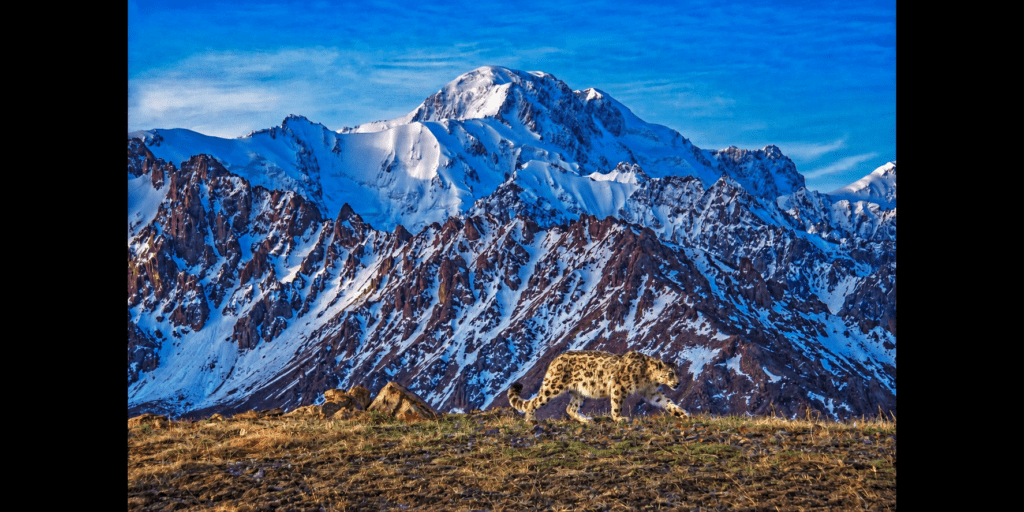
Among the most powerful symbols of this shared natural heritage is the snow leopard — the silent guardian of Central Asia’s mountains.
The snow leopard represents far more than a rare and iconic species. Its survival reflects the health of entire ecosystems that millions of people depend upon every day. Healthy mountain landscapes help secure freshwater resources, reduce disaster risks, sustain pastures and agriculture, preserve biodiversity, and strengthen resilience to climate change across the region.
But today, these ecosystems are under growing pressure.
Climate change is accelerating glacier melting and intensifying water stress. Land degradation, unsustainable grazing, habitat fragmentation and biodiversity loss are placing increasing pressure on fragile mountain environments and rural livelihoods. Communities living closest to nature are often the first to feel the consequences — through declining water availability, degraded pastures, reduced agricultural productivity and increasing climate-related risks.
These challenges do not stop at national borders. And neither can the solutions. Only a coordinated regional response can match the scale of the challenge.
Protecting Central Asia’s mountain ecosystems requires countries to work together to conserve ecological corridors, strengthen transboundary protected areas, improve water and land governance, and invest in climate-resilient livelihoods for communities whose futures are closely tied to nature.
There are already successful examples of regional agreements. For example, a highly successful transboundary nature conservation agreement in Central Asia protects the Ustyurt Plateau and the Turan Temperate Deserts. Spanning across Kazakhstan, Uzbekistan, and Turkmenistan, this initiative has successfully safeguarded vulnerable ecosystems and migratory species like the saiga antelope and snow leopard.
[caption id="attachment_50004" align="aligncenter" width="1774"]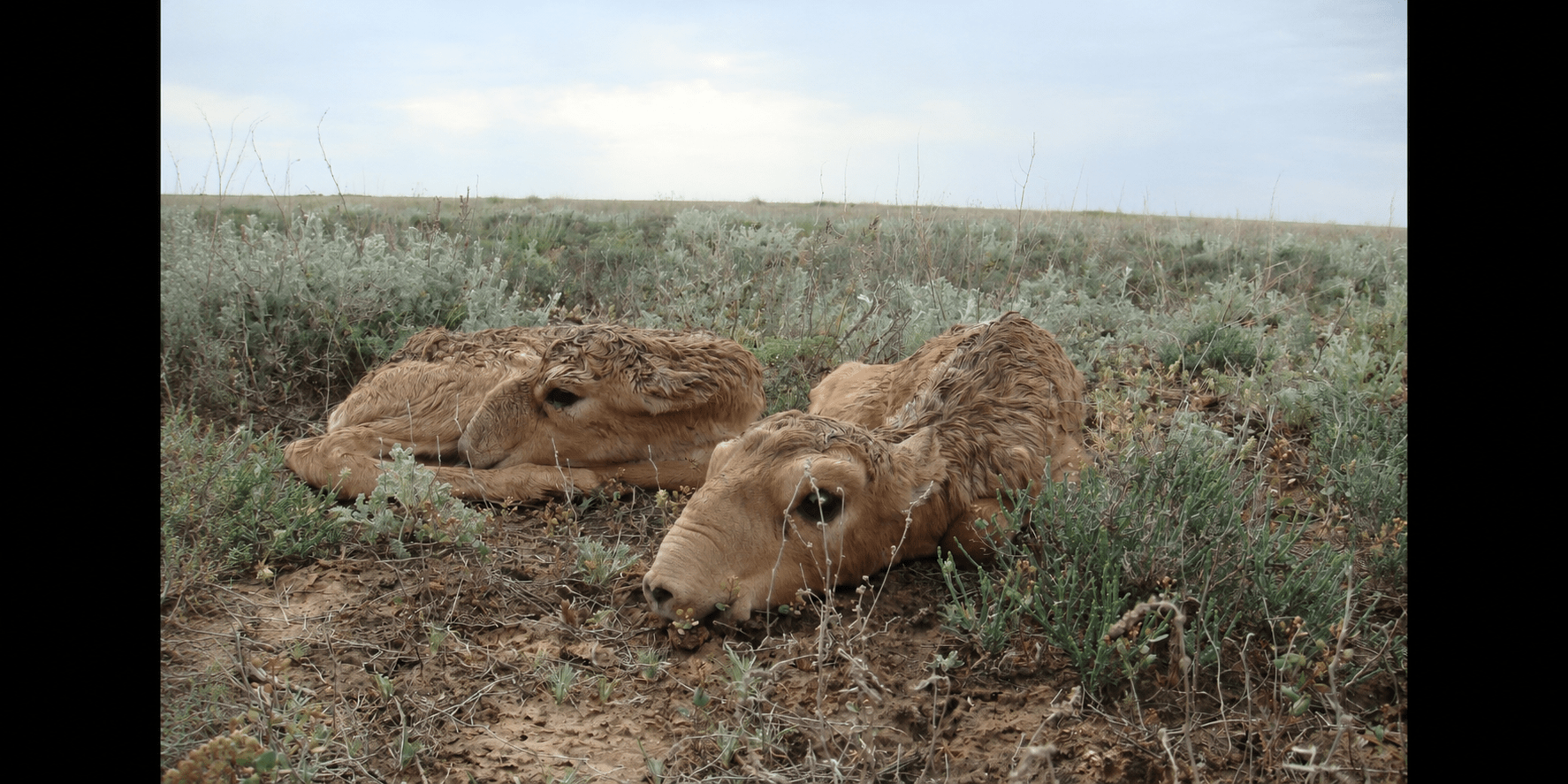 Photo: Saiga calf. Kazakhstan/UNDP Kazakhstan[/caption]
It is encouraging that transboundary cooperation has already taken shape across the region.
Across Central Asia, governments, communities and development partners are already demonstrating that conservation and development can advance together. While each country's experience is unique, the lessons are remarkably similar: when communities benefit from healthy ecosystems, nature and people both thrive.
In Kazakhstan, the snow leopard has become one of the clearest examples of how coordinated conservation efforts can help restore fragile ecosystems across borders. The species inhabits mountain systems that extend beyond national boundaries into China, Kyrgyzstan, Russia, and Uzbekistan, making its protection inseparable from regional cooperation.
Over the past decade, habitat countries have strengthened efforts to protect the species through national conservation strategies, expanded protected areas, and improved ecosystem monitoring. Supported by cooperation between the Government, UNDP, the Global Environment Facility, and the scientific community, large-scale monitoring and habitat conservation initiatives have generated new data on snow leopard populations and migration routes across the Tien Shan and Altai Mountain systems.
In Kazakhstan, the snow leopard population had declined to an estimated 80–100 animals by the mid-1990s, as habitat degradation, human pressure, and ecosystem fragmentation intensified across mountain landscapes. Over the years, systemic interventions, including digital monitoring, the establishment of a genetic bank, and studies of behavior and migration routes, helped support the creation of the Merke Regional Nature Park in 2026, strengthening the protection of critical habitats and ecological corridors shared across borders.
Today, the population is estimated at 152–189 snow leopards, with around 70 percent of the species’ range in Kazakhstan now falling within protected areas.
The growing snow leopard population, a symbol of the “health” of mountain ecosystems, shows that countries can create the conditions needed to conserve this rare and majestic species. It also demonstrates how biodiversity conservation in Central Asia increasingly depends on long-term regional cooperation, scientific collaboration, and shared responsibility for ecosystems that connect communities across borders.
For Kyrgyzstan, the snow leopard has become far more than a symbol of a rare species. It represents a broader commitment to safeguarding the mountain ecosystems that underpin water security, biodiversity, climate resilience, and the well-being of millions across Central Asia.
A longstanding symbol of strength, freedom, and harmony with nature, the snow leopard was officially designated a national symbol of the Kyrgyz Republic, reflecting the country’s deep connection to its mountain heritage.
As one of the world’s most mountainous countries, Kyrgyzstan views the conservation of snow leopard landscapes as both a national and regional priority. Protecting these habitats also means safeguarding forests, pastures, glaciers, snowfields, and watersheds that sustain communities and economies far beyond national borders. Recognizing their critical role in maintaining biodiversity and freshwater resources, Kyrgyzstan has established a legal basis for the protection of glaciers and snowfields and is developing mechanisms for their long-term conservation.
[caption id="attachment_50005" align="aligncenter" width="1774"]
Photo: Saiga calf. Kazakhstan/UNDP Kazakhstan[/caption]
It is encouraging that transboundary cooperation has already taken shape across the region.
Across Central Asia, governments, communities and development partners are already demonstrating that conservation and development can advance together. While each country's experience is unique, the lessons are remarkably similar: when communities benefit from healthy ecosystems, nature and people both thrive.
In Kazakhstan, the snow leopard has become one of the clearest examples of how coordinated conservation efforts can help restore fragile ecosystems across borders. The species inhabits mountain systems that extend beyond national boundaries into China, Kyrgyzstan, Russia, and Uzbekistan, making its protection inseparable from regional cooperation.
Over the past decade, habitat countries have strengthened efforts to protect the species through national conservation strategies, expanded protected areas, and improved ecosystem monitoring. Supported by cooperation between the Government, UNDP, the Global Environment Facility, and the scientific community, large-scale monitoring and habitat conservation initiatives have generated new data on snow leopard populations and migration routes across the Tien Shan and Altai Mountain systems.
In Kazakhstan, the snow leopard population had declined to an estimated 80–100 animals by the mid-1990s, as habitat degradation, human pressure, and ecosystem fragmentation intensified across mountain landscapes. Over the years, systemic interventions, including digital monitoring, the establishment of a genetic bank, and studies of behavior and migration routes, helped support the creation of the Merke Regional Nature Park in 2026, strengthening the protection of critical habitats and ecological corridors shared across borders.
Today, the population is estimated at 152–189 snow leopards, with around 70 percent of the species’ range in Kazakhstan now falling within protected areas.
The growing snow leopard population, a symbol of the “health” of mountain ecosystems, shows that countries can create the conditions needed to conserve this rare and majestic species. It also demonstrates how biodiversity conservation in Central Asia increasingly depends on long-term regional cooperation, scientific collaboration, and shared responsibility for ecosystems that connect communities across borders.
For Kyrgyzstan, the snow leopard has become far more than a symbol of a rare species. It represents a broader commitment to safeguarding the mountain ecosystems that underpin water security, biodiversity, climate resilience, and the well-being of millions across Central Asia.
A longstanding symbol of strength, freedom, and harmony with nature, the snow leopard was officially designated a national symbol of the Kyrgyz Republic, reflecting the country’s deep connection to its mountain heritage.
As one of the world’s most mountainous countries, Kyrgyzstan views the conservation of snow leopard landscapes as both a national and regional priority. Protecting these habitats also means safeguarding forests, pastures, glaciers, snowfields, and watersheds that sustain communities and economies far beyond national borders. Recognizing their critical role in maintaining biodiversity and freshwater resources, Kyrgyzstan has established a legal basis for the protection of glaciers and snowfields and is developing mechanisms for their long-term conservation.
[caption id="attachment_50005" align="aligncenter" width="1774"]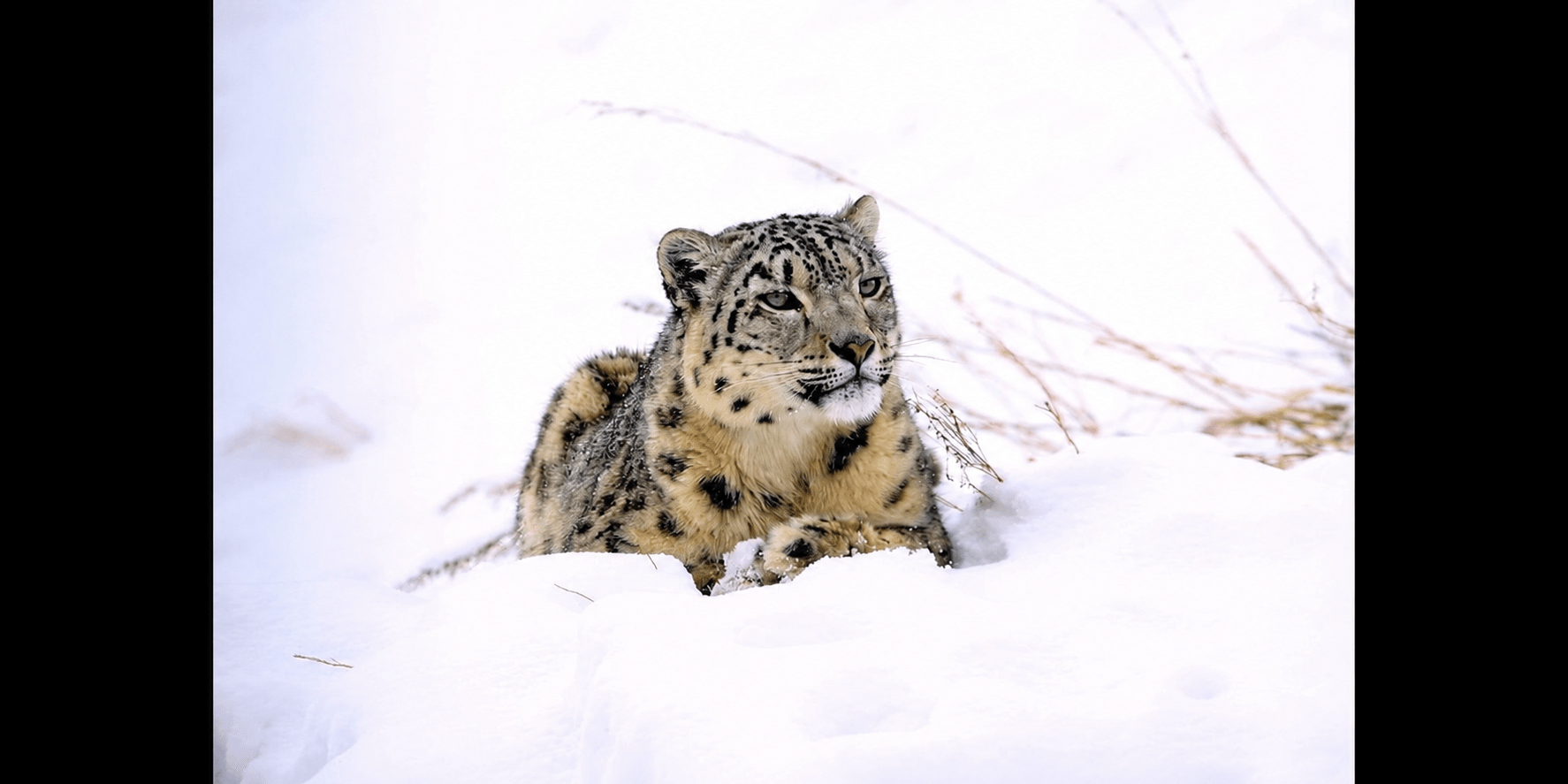 Photo: UNDP Kyrgyzstan/Vlad Ushakov[/caption]
Kyrgyzstan has also used snow leopard conservation as a platform for advancing mountain resilience and regional cooperation. The country championed the UN Five Years of Action for the Development of Mountain Regions (2023–2027), supported the establishment of International Snow Leopard Day, and promotes transboundary cooperation through GSLEP, regional agreements, and joint conservation efforts among range countries.
Kyrgyzstan’s experience demonstrates how conserving one iconic species can unite countries around a shared agenda for mountain resilience, biodiversity conservation, water security, and sustainable development.
[caption id="attachment_50006" align="aligncenter" width="1774"]
Photo: UNDP Kyrgyzstan/Vlad Ushakov[/caption]
Kyrgyzstan has also used snow leopard conservation as a platform for advancing mountain resilience and regional cooperation. The country championed the UN Five Years of Action for the Development of Mountain Regions (2023–2027), supported the establishment of International Snow Leopard Day, and promotes transboundary cooperation through GSLEP, regional agreements, and joint conservation efforts among range countries.
Kyrgyzstan’s experience demonstrates how conserving one iconic species can unite countries around a shared agenda for mountain resilience, biodiversity conservation, water security, and sustainable development.
[caption id="attachment_50006" align="aligncenter" width="1774"]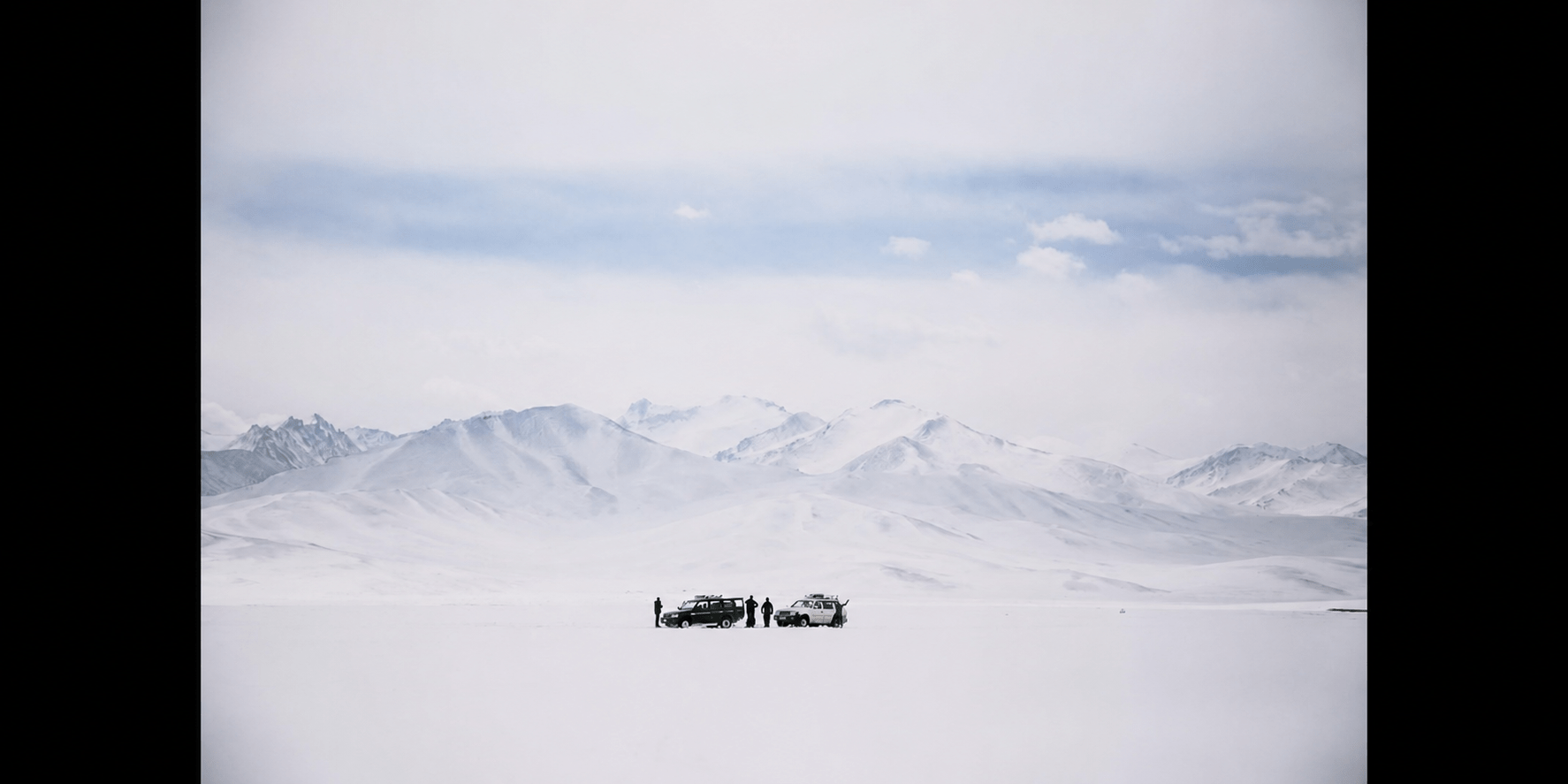 Photo: Snow leopard’s habitat/UNDP Tajikistan[/caption]
High in the mountains of Tajikistan, people have lived alongside snow leopards for generations. But for many years, life was becoming harder for both. Shrinking pastures and disappearing wildlife pushed communities and predators into conflict. When snow leopards attacked livestock, families suffered. And when wild prey disappeared, the future of the snow leopard became uncertain.
Today, there is hope.
According to the 2025 edition of Tajikistan’s national Red Book, the country’s snow leopard population has grown to around 500 individuals — nearly double the estimated 250 recorded in 2017. Behind these numbers is a powerful lesson: protecting nature only works when local people are part of the solution.
A conservation project led by UNDP and funded by the Global Environment Facility (GEF) helped mountain communities enhance their livelihoods while protecting wildlife. Women in remote villages were trained in wildlife monitoring and ecotourism, gaining new opportunities while helping monitor and protect nature.
Altogether, 450 people from remote mountain areas, including protected area rangers and community members, strengthened their skills in smart patrolling and wildlife monitoring through project-supported trainings. These enhanced capacities improved wildlife tracking and threat detection, contributing to reduced illegal hunting and tree cutting.
The project also introduced a simple but effective solution to reduce conflict between people and snow leopards. Communities received hay to feed livestock for just 20 extra days in spring, allowing mountain pastures to recover and wild prey to return. With more food in the wild, snow leopards were less likely to attack farm animals.
Most importantly, communities were trusted to lead. Through small grants and local initiatives, they supported restoration of degraded pastures and forests, adoption of sustainable livestock practices, and reduced pressure on fragile mountain ecosystems, helping conserve iconic species while strengthening local livelihoods.
The story of the snow leopard in Tajikistan shows that when communities are empowered, nature can recover too.
Importantly, conservation success was not driven by communities alone. It was also enabled by stronger institutions, enhanced protected area management, expanded wildlife monitoring, and closer cooperation among scientists and conservation agencies. At the same time, while biodiversity frameworks are in place, their implementation depends on the capacities of staff at national and subnational levels. Continued education, skills development, awareness raising and, overall, investment in people remain essential to sustaining conservation efforts.
The return of the snow leopard reflects the recovery of entire mountain ecosystems.
[caption id="attachment_50007" align="aligncenter" width="1774"]
Photo: Snow leopard’s habitat/UNDP Tajikistan[/caption]
High in the mountains of Tajikistan, people have lived alongside snow leopards for generations. But for many years, life was becoming harder for both. Shrinking pastures and disappearing wildlife pushed communities and predators into conflict. When snow leopards attacked livestock, families suffered. And when wild prey disappeared, the future of the snow leopard became uncertain.
Today, there is hope.
According to the 2025 edition of Tajikistan’s national Red Book, the country’s snow leopard population has grown to around 500 individuals — nearly double the estimated 250 recorded in 2017. Behind these numbers is a powerful lesson: protecting nature only works when local people are part of the solution.
A conservation project led by UNDP and funded by the Global Environment Facility (GEF) helped mountain communities enhance their livelihoods while protecting wildlife. Women in remote villages were trained in wildlife monitoring and ecotourism, gaining new opportunities while helping monitor and protect nature.
Altogether, 450 people from remote mountain areas, including protected area rangers and community members, strengthened their skills in smart patrolling and wildlife monitoring through project-supported trainings. These enhanced capacities improved wildlife tracking and threat detection, contributing to reduced illegal hunting and tree cutting.
The project also introduced a simple but effective solution to reduce conflict between people and snow leopards. Communities received hay to feed livestock for just 20 extra days in spring, allowing mountain pastures to recover and wild prey to return. With more food in the wild, snow leopards were less likely to attack farm animals.
Most importantly, communities were trusted to lead. Through small grants and local initiatives, they supported restoration of degraded pastures and forests, adoption of sustainable livestock practices, and reduced pressure on fragile mountain ecosystems, helping conserve iconic species while strengthening local livelihoods.
The story of the snow leopard in Tajikistan shows that when communities are empowered, nature can recover too.
Importantly, conservation success was not driven by communities alone. It was also enabled by stronger institutions, enhanced protected area management, expanded wildlife monitoring, and closer cooperation among scientists and conservation agencies. At the same time, while biodiversity frameworks are in place, their implementation depends on the capacities of staff at national and subnational levels. Continued education, skills development, awareness raising and, overall, investment in people remain essential to sustaining conservation efforts.
The return of the snow leopard reflects the recovery of entire mountain ecosystems.
[caption id="attachment_50007" align="aligncenter" width="1774"]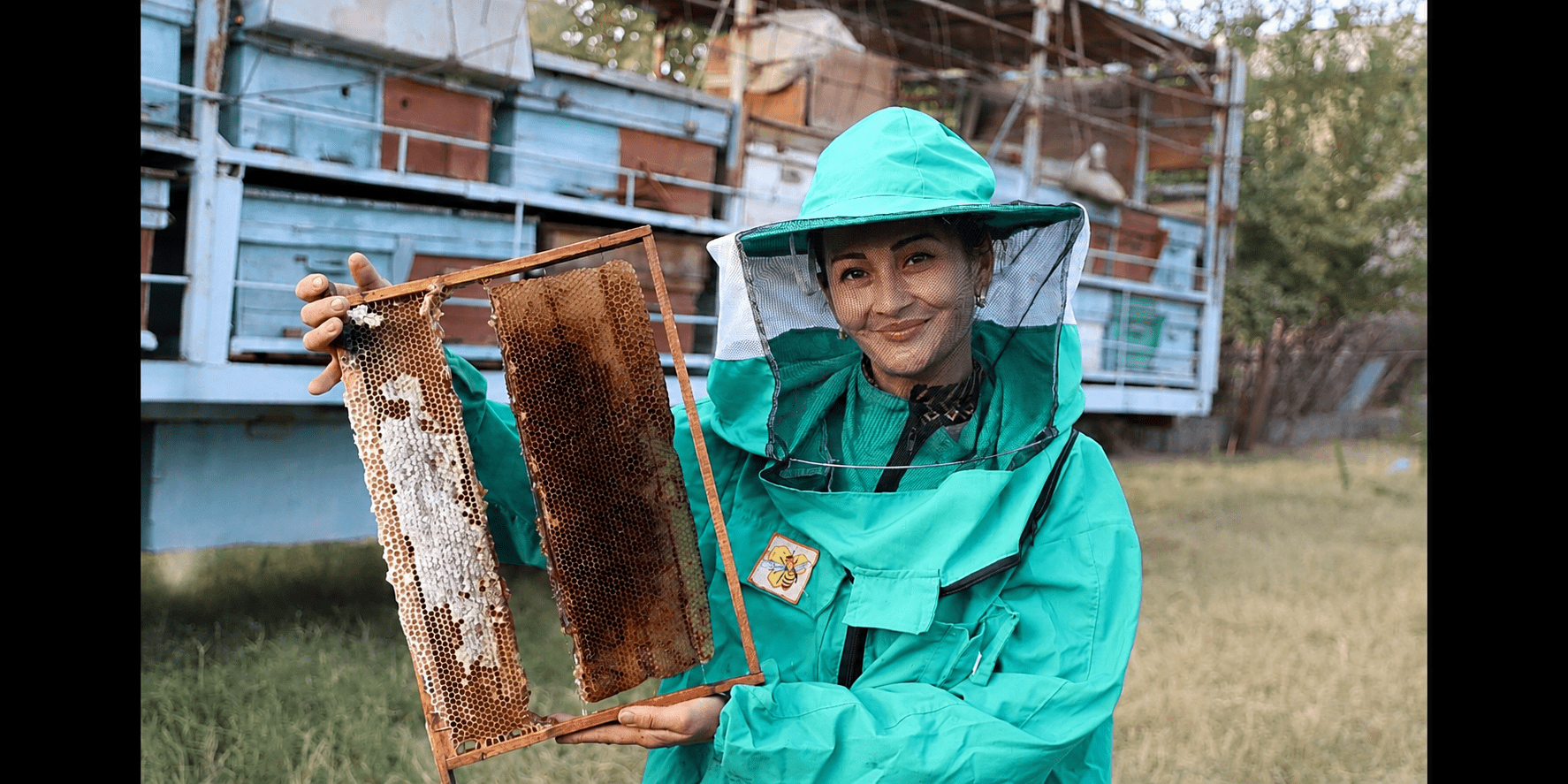 Photo: UNDP Turkmenistan / Dovlet Rejepov[/caption]
In Turkmenistan, in the Aral Sea Basin, communities are restoring degraded pastures and adopting more sustainable land management practices to improve productivity while reducing pressure on fragile ecosystems. These efforts are helping rural households strengthen resilience to climate change while supporting biodiversity conservation.
Environmental degradation has had significant social and economic consequences, particularly for women and vulnerable households that depend heavily on natural resources for livelihoods and food security. As climate-related pressures such as declining agricultural productivity, degraded grazing lands and increasing water stress intensify, strengthening women’s participation in sustainable resource management and local decision-making is becoming increasingly important.
Across affected landscapes, practical efforts are helping reduce pressure on natural resources while supporting livelihoods and biodiversity conservation. Communities are increasingly engaged in identifying solutions that strengthen resilience, improve resource management, and promote inclusive participation in sustainable local development.
[caption id="attachment_50008" align="aligncenter" width="1774"]
Photo: UNDP Turkmenistan / Dovlet Rejepov[/caption]
In Turkmenistan, in the Aral Sea Basin, communities are restoring degraded pastures and adopting more sustainable land management practices to improve productivity while reducing pressure on fragile ecosystems. These efforts are helping rural households strengthen resilience to climate change while supporting biodiversity conservation.
Environmental degradation has had significant social and economic consequences, particularly for women and vulnerable households that depend heavily on natural resources for livelihoods and food security. As climate-related pressures such as declining agricultural productivity, degraded grazing lands and increasing water stress intensify, strengthening women’s participation in sustainable resource management and local decision-making is becoming increasingly important.
Across affected landscapes, practical efforts are helping reduce pressure on natural resources while supporting livelihoods and biodiversity conservation. Communities are increasingly engaged in identifying solutions that strengthen resilience, improve resource management, and promote inclusive participation in sustainable local development.
[caption id="attachment_50008" align="aligncenter" width="1774"]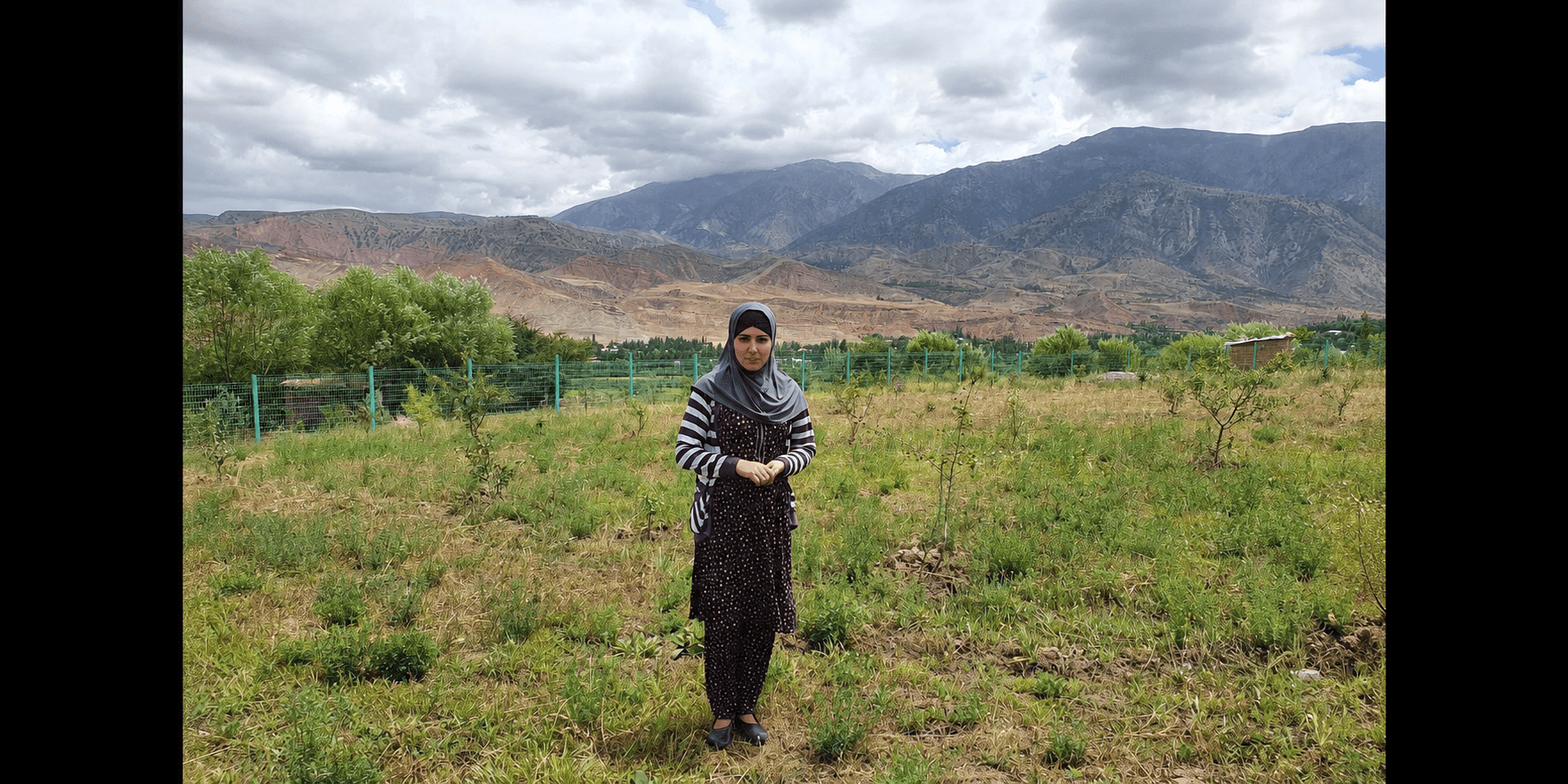 Photo: UNDP Uzbekistan[/caption]
In Uzbekistan, community-led solutions in biodiversity-rich landscapes are demonstrating how ecosystem protection can go hand in hand with improving everyday life. Among many locally driven initiatives, families like Gulnoza Nuriddinova’s benefited from practical measures such as fencing, which helped protect household gardens and crops from wildlife intrusion and uncontrolled grazing, improving food security and reducing economic losses. For families like Sharofat Fayziddinova’s, access to piped water within the village transformed daily life by eliminating the need for frequent journeys to remote water sources, saving time and effort while improving living conditions.
While these were individual solutions tailored to local needs, together they helped reduce pressure on sensitive natural areas, lower the risk of human-wildlife encounters, and strengthen the relationship between communities and the ecosystems on which they depend. They reflect an important lesson: conservation efforts are most effective when communities benefit directly from environmental protection and become active partners in safeguarding nature.
For people living in mountain and rural areas, biodiversity is not an abstract concept. It is directly connected to water access, food security, incomes, health and resilience. The experiences of communities across Central Asia show that conservation is most effective when it improves people's lives while protecting the ecosystems on which they depend.
Healthy mountain ecosystems help regulate river systems that sustain economies and populations across borders. Degraded forests, pastures and watersheds increase erosion, water insecurity and disaster risks for entire regions downstream. Protecting nature is therefore also an investment in regional stability, economic resilience and human security.
The region has already demonstrated growing cooperation on climate action, biodiversity protection and sustainable natural resource management. Countries are expanding protected areas, strengthening environmental governance and investing in ecosystem restoration. Regional dialogue and collaboration are increasing.
But much more is needed to match the scale of today’s environmental challenges.
If Central Asia is to safeguard its shared natural heritage, three priorities deserve greater attention: investment in transboundary ecological corridors; stronger cooperation on water, land and biodiversity governance; and expanded support for communities whose livelihoods depend directly on healthy ecosystems.
The GEF Assembly provides an important opportunity to strengthen this momentum.
As Resident Representatives of the United Nations Development Programme (UNDP) in Central Asia, we believe that with the leadership of the five Central Asian countries, the region can become a global example of how biodiversity conservation, climate resilience and sustainable development can advance together across borders.
The future of the snow leopard, like the future of Central Asia’s shared mountain ecosystems, depends on continued cooperation across borders.
At this moment, we call for stronger partnerships and greater investment in transboundary biodiversity conservation across Central Asia — investment that protects ecosystems while creating opportunity, resilience and hope for the people who call these mountains home.
The snow leopard does not recognize national borders. Neither do rivers, droughts, dust storms or climate impacts. Our response cannot stop at borders either. By investing together in nature, Central Asia can strengthen resilience, create opportunity and protect the ecosystems that sustain future generations.
Photo: UNDP Uzbekistan[/caption]
In Uzbekistan, community-led solutions in biodiversity-rich landscapes are demonstrating how ecosystem protection can go hand in hand with improving everyday life. Among many locally driven initiatives, families like Gulnoza Nuriddinova’s benefited from practical measures such as fencing, which helped protect household gardens and crops from wildlife intrusion and uncontrolled grazing, improving food security and reducing economic losses. For families like Sharofat Fayziddinova’s, access to piped water within the village transformed daily life by eliminating the need for frequent journeys to remote water sources, saving time and effort while improving living conditions.
While these were individual solutions tailored to local needs, together they helped reduce pressure on sensitive natural areas, lower the risk of human-wildlife encounters, and strengthen the relationship between communities and the ecosystems on which they depend. They reflect an important lesson: conservation efforts are most effective when communities benefit directly from environmental protection and become active partners in safeguarding nature.
For people living in mountain and rural areas, biodiversity is not an abstract concept. It is directly connected to water access, food security, incomes, health and resilience. The experiences of communities across Central Asia show that conservation is most effective when it improves people's lives while protecting the ecosystems on which they depend.
Healthy mountain ecosystems help regulate river systems that sustain economies and populations across borders. Degraded forests, pastures and watersheds increase erosion, water insecurity and disaster risks for entire regions downstream. Protecting nature is therefore also an investment in regional stability, economic resilience and human security.
The region has already demonstrated growing cooperation on climate action, biodiversity protection and sustainable natural resource management. Countries are expanding protected areas, strengthening environmental governance and investing in ecosystem restoration. Regional dialogue and collaboration are increasing.
But much more is needed to match the scale of today’s environmental challenges.
If Central Asia is to safeguard its shared natural heritage, three priorities deserve greater attention: investment in transboundary ecological corridors; stronger cooperation on water, land and biodiversity governance; and expanded support for communities whose livelihoods depend directly on healthy ecosystems.
The GEF Assembly provides an important opportunity to strengthen this momentum.
As Resident Representatives of the United Nations Development Programme (UNDP) in Central Asia, we believe that with the leadership of the five Central Asian countries, the region can become a global example of how biodiversity conservation, climate resilience and sustainable development can advance together across borders.
The future of the snow leopard, like the future of Central Asia’s shared mountain ecosystems, depends on continued cooperation across borders.
At this moment, we call for stronger partnerships and greater investment in transboundary biodiversity conservation across Central Asia — investment that protects ecosystems while creating opportunity, resilience and hope for the people who call these mountains home.
The snow leopard does not recognize national borders. Neither do rivers, droughts, dust storms or climate impacts. Our response cannot stop at borders either. By investing together in nature, Central Asia can strengthen resilience, create opportunity and protect the ecosystems that sustain future generations.
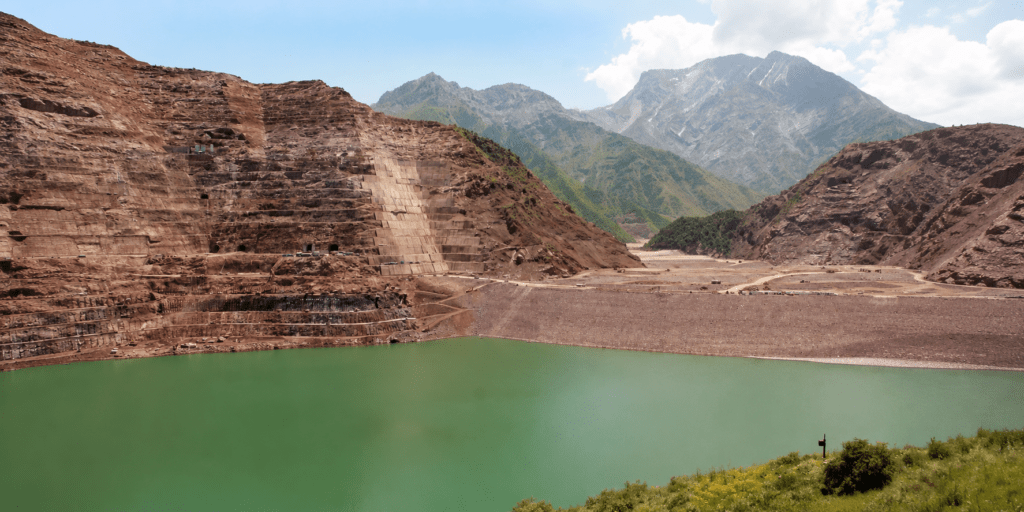
Inside Tajikistan’s Rogun Dam, the Mega-Project Built to Power a Nation
“Building a hydroelectric power plant is a responsibility for our country!”
Displayed in Tajik at the entrance to the Rogun construction site, deep in the mountains of Tajikistan, the slogan captures the significance of what has become the most ambitious infrastructure project in the country’s history - and one of the largest hydropower developments in the world.
Nearly fifty years after the Soviet authorities launched construction in 1976, the mega-project is finally entering a decisive phase. Long delayed by the collapse of the Soviet Union, the civil war of the 1990s, and the economic struggles of Central Asia’s poorest country, the project has gained renewed momentum over the past decade.
After a two-hour drive through the mountains east of Dushanbe, the scale of the site gradually comes into view. Located more than 1,300 meters above sea level, Rogun is far more than a dam. The complex includes dozens of kilometers of tunnels, diversion canals, underground power stations, and an extensive network of technical infrastructure carved into the rock.
[caption id="attachment_49947" align="aligncenter" width="1365"] Turbines in the process of being built[/caption]
Once completed, according to current project plans, the structure will rise to 335 meters, making it the tallest dam in the world, Tajik officials proudly note. For now, it stands at approximately 140 meters.
“This is where the Vakhsh River flows,” says Anvar Rahmonov, Production Director at Rogun HPP, standing on a ridge overlooking the future reservoir.
[caption id="attachment_49948" align="aligncenter" width="2048"]
Turbines in the process of being built[/caption]
Once completed, according to current project plans, the structure will rise to 335 meters, making it the tallest dam in the world, Tajik officials proudly note. For now, it stands at approximately 140 meters.
“This is where the Vakhsh River flows,” says Anvar Rahmonov, Production Director at Rogun HPP, standing on a ridge overlooking the future reservoir.
[caption id="attachment_49948" align="aligncenter" width="2048"]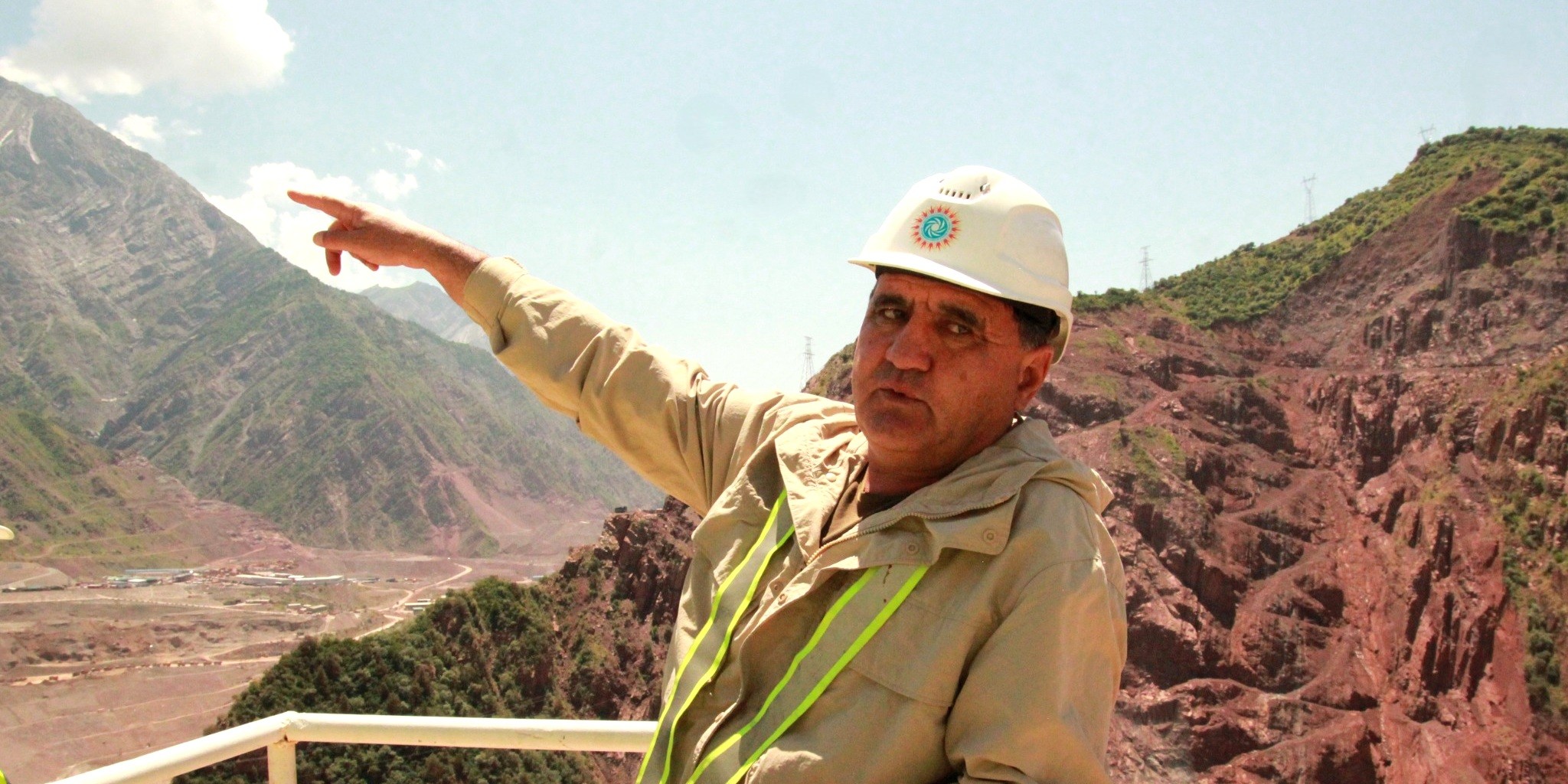 Anvar Rahmonov, Production Director at Rogun HPP[/caption]
Fed by glaciers in the Pamir Mountains, the river is diverted through underground galleries that currently power two 600-megawatt turbines.
Below, dozens of trucks move continuously across the site while workers labor across different sections of the project. The deep blue waters of the future reservoir - designed to hold more than 13 billion cubic meters of water - contrast sharply with the surrounding red-earth mountains and the constant movement of heavy machinery.
The project remains far from complete. Four additional turbines are still under construction. Once fully operational, the plant will have a total installed capacity of 3,600 megawatts, according to Tajik project officials, comparable to that of a nuclear power station.
Ending Chronic Energy Shortages
For a country of just over ten million people that continues to face electricity shortages every winter, the stakes are enormous.
Despite possessing one of Central Asia’s largest hydropower potentials, Tajikistan still suffers from a chronic energy deficit. During the winter months, the country lacks roughly a quarter of the electricity needed to meet domestic demand, resulting in rationing and power restrictions across much of rural Tajikistan.
“Thanks to this project, Tajikistan will be able to achieve energy independence,” says Andres Ricaldi, an engineer with the Franco-Belgian consultancy Tractebel, which is involved in the project. In the substation, a diagram of the power lines supplying the different regions is shown.
[caption id="attachment_49946" align="aligncenter" width="2048"]
Anvar Rahmonov, Production Director at Rogun HPP[/caption]
Fed by glaciers in the Pamir Mountains, the river is diverted through underground galleries that currently power two 600-megawatt turbines.
Below, dozens of trucks move continuously across the site while workers labor across different sections of the project. The deep blue waters of the future reservoir - designed to hold more than 13 billion cubic meters of water - contrast sharply with the surrounding red-earth mountains and the constant movement of heavy machinery.
The project remains far from complete. Four additional turbines are still under construction. Once fully operational, the plant will have a total installed capacity of 3,600 megawatts, according to Tajik project officials, comparable to that of a nuclear power station.
Ending Chronic Energy Shortages
For a country of just over ten million people that continues to face electricity shortages every winter, the stakes are enormous.
Despite possessing one of Central Asia’s largest hydropower potentials, Tajikistan still suffers from a chronic energy deficit. During the winter months, the country lacks roughly a quarter of the electricity needed to meet domestic demand, resulting in rationing and power restrictions across much of rural Tajikistan.
“Thanks to this project, Tajikistan will be able to achieve energy independence,” says Andres Ricaldi, an engineer with the Franco-Belgian consultancy Tractebel, which is involved in the project. In the substation, a diagram of the power lines supplying the different regions is shown.
[caption id="attachment_49946" align="aligncenter" width="2048"] Substation zone[/caption]
Yet Rogun’s ambitions extend well beyond the domestic market.
“The meaning of the Rogun Dam has changed,” explains Artemy Kalinovsky, Professor of History at Temple University. “It is no longer simply a Soviet-era development project intended to provide electricity and support irrigation. It has also become a way of generating foreign currency revenues through electricity exports.”
The government hopes to turn Tajikistan into a regional energy exporter. Through the CASA-1000 transmission project, Tajikistan hopes to send electricity through Afghanistan to Pakistan, although the system cannot operate until the Afghan section of the line is completed.
[caption id="attachment_49945" align="aligncenter" width="1774"]
Substation zone[/caption]
Yet Rogun’s ambitions extend well beyond the domestic market.
“The meaning of the Rogun Dam has changed,” explains Artemy Kalinovsky, Professor of History at Temple University. “It is no longer simply a Soviet-era development project intended to provide electricity and support irrigation. It has also become a way of generating foreign currency revenues through electricity exports.”
The government hopes to turn Tajikistan into a regional energy exporter. Through the CASA-1000 transmission project, Tajikistan hopes to send electricity through Afghanistan to Pakistan, although the system cannot operate until the Afghan section of the line is completed.
[caption id="attachment_49945" align="aligncenter" width="1774"] Entrance to the Rogun construction site[/caption]
A National Project Becomes an International Showcase
The project’s ambitions, however, continue to face technical challenges.
“Construction is broadly on schedule,” says Lesha Witmer, a Netherlands-based water management specialist. “The main bottleneck now concerns the turbines, because that is where the project’s future income revenues will be generated.”
According to Witmer, most international financing currently supports civil engineering works rather than power-generation equipment.
The financial burden is already immense. The World Bank has said Rogun will require about $6.29 billion to complete, with financing expected to come from project revenues, domestic resources, and development partners. In the 2000s, the authorities even considered relying on citizens’ savings to finance the project. Unable to raise sufficient funds domestically, Dushanbe ultimately turned to international lenders, who now provide more than half of the project’s financing.
Securing that support was not straightforward.
For years, international financial institutions remained cautious, largely because of concerns over the project’s regional implications for water management. The Vakhsh River, the Amu Darya’s main tributary, is part of a transboundary water system shared by several Central Asian states. Its waters are vital for agriculture in both Uzbekistan and Turkmenistan, making water allocation a highly sensitive issue.
For more than two decades, Tashkent opposed the construction of Rogun, fearing that filling the reservoir would reduce downstream water supplies. Relations between the two countries have improved significantly in recent years, however, helping to ease international concerns.
The death of former Uzbek President Islam Karimov in 2016 marked a turning point. His successor, Shavkat Mirziyoyev, adopted a more pragmatic approach toward Rogun, paving the way for greater international involvement.
The World Bank eventually approved the project's technical studies before endorsing a major financing package in 2024 involving several international lenders, including the European Investment Bank.
“The World Bank’s approval was decisive,” says Ricaldi.
Today, more than half of Rogun’s financing comes from international partners. That dependence has also imposed strict monitoring and reporting requirements, specialists involved in the project say. According to several sources, Tajikistan’s Prime Minister visits the site almost every week to oversee construction progress.
The project has also become closely associated with President Emomali Rahmon.
In power since 1992, Rahmon regularly describes Rogun as the “construction project of the century” for Tajikistan. His portrait is ubiquitous throughout the site, reflecting the dam’s political and symbolic importance.
[caption id="attachment_49949" align="aligncenter" width="2048"]
Entrance to the Rogun construction site[/caption]
A National Project Becomes an International Showcase
The project’s ambitions, however, continue to face technical challenges.
“Construction is broadly on schedule,” says Lesha Witmer, a Netherlands-based water management specialist. “The main bottleneck now concerns the turbines, because that is where the project’s future income revenues will be generated.”
According to Witmer, most international financing currently supports civil engineering works rather than power-generation equipment.
The financial burden is already immense. The World Bank has said Rogun will require about $6.29 billion to complete, with financing expected to come from project revenues, domestic resources, and development partners. In the 2000s, the authorities even considered relying on citizens’ savings to finance the project. Unable to raise sufficient funds domestically, Dushanbe ultimately turned to international lenders, who now provide more than half of the project’s financing.
Securing that support was not straightforward.
For years, international financial institutions remained cautious, largely because of concerns over the project’s regional implications for water management. The Vakhsh River, the Amu Darya’s main tributary, is part of a transboundary water system shared by several Central Asian states. Its waters are vital for agriculture in both Uzbekistan and Turkmenistan, making water allocation a highly sensitive issue.
For more than two decades, Tashkent opposed the construction of Rogun, fearing that filling the reservoir would reduce downstream water supplies. Relations between the two countries have improved significantly in recent years, however, helping to ease international concerns.
The death of former Uzbek President Islam Karimov in 2016 marked a turning point. His successor, Shavkat Mirziyoyev, adopted a more pragmatic approach toward Rogun, paving the way for greater international involvement.
The World Bank eventually approved the project's technical studies before endorsing a major financing package in 2024 involving several international lenders, including the European Investment Bank.
“The World Bank’s approval was decisive,” says Ricaldi.
Today, more than half of Rogun’s financing comes from international partners. That dependence has also imposed strict monitoring and reporting requirements, specialists involved in the project say. According to several sources, Tajikistan’s Prime Minister visits the site almost every week to oversee construction progress.
The project has also become closely associated with President Emomali Rahmon.
In power since 1992, Rahmon regularly describes Rogun as the “construction project of the century” for Tajikistan. His portrait is ubiquitous throughout the site, reflecting the dam’s political and symbolic importance.
[caption id="attachment_49949" align="aligncenter" width="2048"]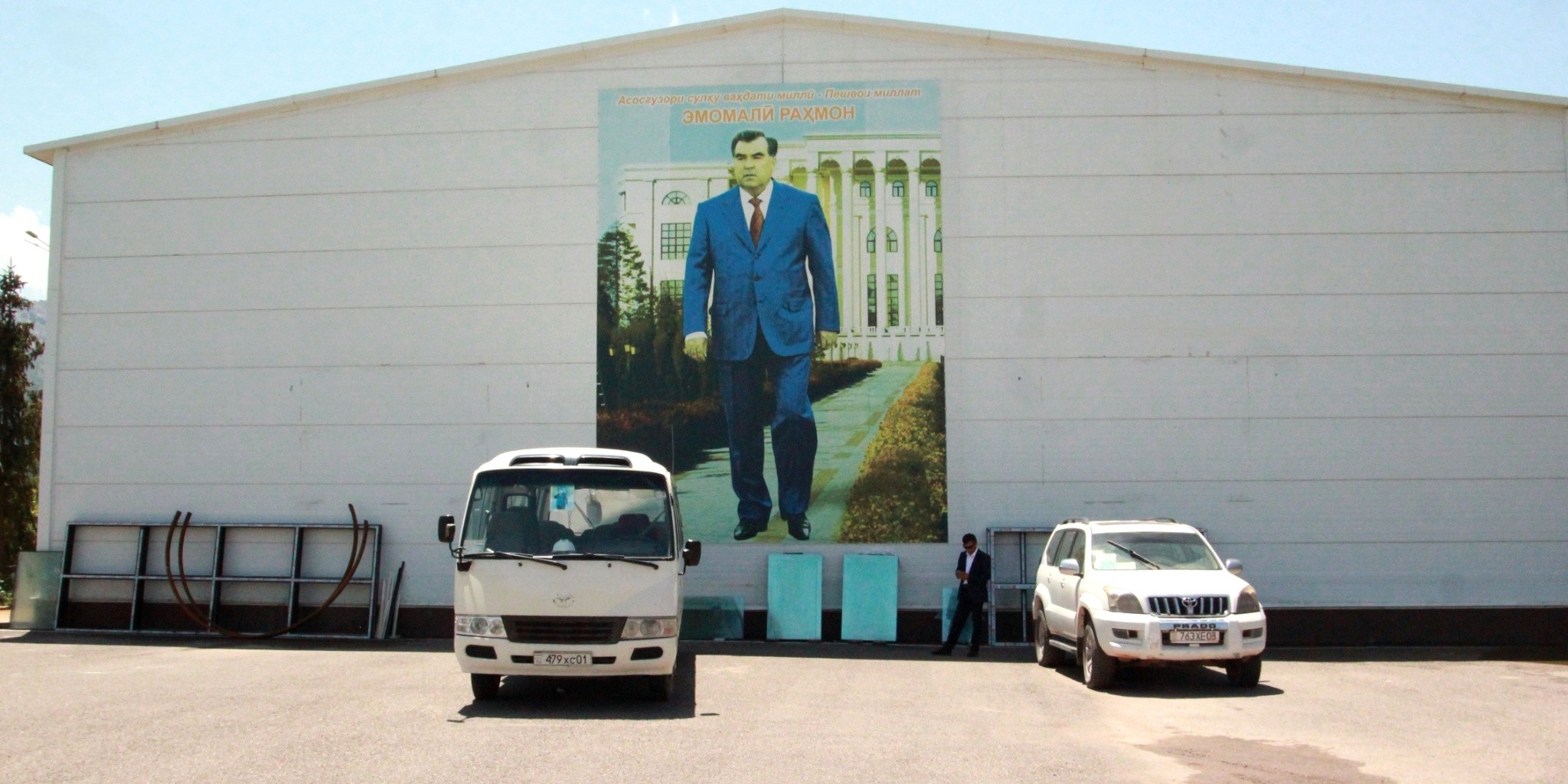 Rogun base with Rahmon portrait[/caption]
A Green Mega-Project in an Era of Climate Change
Officials also present Rogun as a cornerstone of Central Asia’s energy transition.
“In several downstream countries, electricity is still largely generated from coal and oil,” says Rustam Abdullaiev, Head of Water and Energy Policy at Tajikistan’s Ministry of Energy and Water Resources. “Hydropower can significantly reduce greenhouse gas emissions across the region.”
Climate change, however, is adding a new layer of uncertainty to the debate. The accelerated melting of Pamir glaciers could reduce river flows in the coming decades.
“We are already observing certain changes,” Abdullaiev acknowledges. “That is why we are developing a cascade of reservoirs that will allow us to better regulate water resources and mitigate some of the effects of climate change.”
For Kalinovsky, Rogun also addresses a more immediate concern: sediment accumulation at the Nurek Dam, currently Tajikistan’s main hydropower facility.
“A large amount of silt flows downstream toward Nurek,” he explains. “The more sediment accumulates, the more the reservoir’s capacity decreases. Without Rogun, Nurek’s storage capacity will eventually decline quite significantly.”
For now, attention is focused on the next stage of construction. The authorities plan to raise the reservoir level again in the coming months, a crucial test for the project's future.
Rogun base with Rahmon portrait[/caption]
A Green Mega-Project in an Era of Climate Change
Officials also present Rogun as a cornerstone of Central Asia’s energy transition.
“In several downstream countries, electricity is still largely generated from coal and oil,” says Rustam Abdullaiev, Head of Water and Energy Policy at Tajikistan’s Ministry of Energy and Water Resources. “Hydropower can significantly reduce greenhouse gas emissions across the region.”
Climate change, however, is adding a new layer of uncertainty to the debate. The accelerated melting of Pamir glaciers could reduce river flows in the coming decades.
“We are already observing certain changes,” Abdullaiev acknowledges. “That is why we are developing a cascade of reservoirs that will allow us to better regulate water resources and mitigate some of the effects of climate change.”
For Kalinovsky, Rogun also addresses a more immediate concern: sediment accumulation at the Nurek Dam, currently Tajikistan’s main hydropower facility.
“A large amount of silt flows downstream toward Nurek,” he explains. “The more sediment accumulates, the more the reservoir’s capacity decreases. Without Rogun, Nurek’s storage capacity will eventually decline quite significantly.”
For now, attention is focused on the next stage of construction. The authorities plan to raise the reservoir level again in the coming months, a crucial test for the project's future.

Washington Links TRIPP and Jackson-Vanik Repeal in Push Toward Central Asia
A notable strategic shift is taking place in U.S. foreign policy, one that could have a long-term impact on the economic architecture of Eurasia. After decades in which Central Asia and the South Caucasus were viewed largely through the lens of security, counterterrorism, and competition with Russia and China, Washington is increasingly emphasizing trade, investment, transport routes, and access to critical minerals. One of the clearest signs of this shift came during a recent hearing before the U.S. Senate Foreign Relations Committee, where Senator Steve Daines and Secretary of State Marco Rubio discussed the implementation of the U.S.-backed Trump Route for International Peace and Prosperity (TRIPP) framework, as well as the need to remove the outdated Jackson-Vanik trade restrictions. At first glance, these may appear to be separate issues: the peace process in the South Caucasus and Cold War-era trade legislation. In reality, however, they are closely connected. Together, they point to a broader U.S. effort to link Central Asia, the South Caucasus, and Western markets through trade, transport, and investment. In recent years, Republican Senator Steve Daines of Montana has emerged as one of the most active advocates of expanding America’s presence in Central Asia. As co-chair of the Senate Central Asia Caucus and one of the leading proponents of legislative efforts to repeal Jackson-Vanik restrictions, Daines has consistently argued for stronger trade and investment ties between the United States and the countries of the region. During the hearing, Daines placed particular emphasis on the importance of the Armenia-Azerbaijan peace process, describing it as one of the most underappreciated diplomatic efforts of recent years. According to the senator, resolving the conflict could open the door to a large-scale economic transformation of the wider region. Particularly noteworthy was his reference to a geopolitical concept associated with former U.S. National Security Advisor Zbigniew Brzezinski. In Daines’ formulation, Central Asia represents the “bottle,” while Azerbaijan serves as its “cork.” Opening transport routes through the South Caucasus, he argued, would allow flows of oil, gas, critical minerals, and other resources to move toward Western markets rather than toward Russia, China, or Iran. Daines said this approach helped address some of the most difficult issues in the Armenia-Azerbaijan settlement process and laid the foundation for what he called a “landmark agreement” after nearly four decades of conflict. Secretary of State Marco Rubio described TRIPP as an initiative capable of fundamentally transforming Armenia’s economic role in the region. According to Rubio, the framework not only addresses the issue of transport access, which had long been a source of disagreement between Baku and Yerevan, but also creates an opportunity for Armenia to become a major trade and logistics hub connecting Europe and Asia. Rubio described TRIPP as central to the Armenia-Azerbaijan settlement framework, emphasizing that the project could generate substantial investment flows and attract U.S. companies to infrastructure and transport projects across the region. Washington’s argument is that trade, transit, investment, and infrastructure can give the political settlement a stronger economic base. Unlike many previous peace initiatives, TRIPP is built around tangible economic incentives: trade, transit, investment, and infrastructure development. It is within this broader strategy that the question of repealing the Jackson-Vanik amendment acquires new significance. The amendment was adopted by the U.S. Congress in 1974 as a means of pressuring the Soviet Union and other non-market economies that restricted freedom of emigration. The law denied such countries most-favored-nation trade status and imposed additional trade restrictions. Despite the collapse of the Soviet Union more than three decades ago, the amendment formally remains in effect for several post-Soviet states, including Kazakhstan, Uzbekistan, Tajikistan, Turkmenistan, and Azerbaijan. Although most of these countries receive annual waivers and effectively enjoy normal trade relations with the United States, the legislation itself remains on the books. At the hearing, Daines described Jackson-Vanik as one of the principal irritants in U.S. relations with both Azerbaijan and the countries of Central Asia. The senator argued that the restrictions have long since lost their original relevance and continue to impede the development of economic ties. Rubio’s response when asked about the Jackson-Vanik amendment was unequivocal. “It's a detriment. We'd like to see it removed,” the Secretary of State said. Kazakhstan’s ambassador to the United States, Magzhan Ilyassov, welcomed the exchange. “U.S.-Kazakhstan relations are at new heights and your engagement with Central Asia has played a pivotal role in that progress,” Magzhan Ilyassov said on X. He said that removing the “relic” of the Jackson-Vanik amendment would support “the new chapter in the partnership.” For many American policymakers, the issue has long ceased to be merely a trade matter. Today, Jackson-Vanik is increasingly viewed as a symbolic reminder that U.S. policy toward Central Asia still relies in part on instruments inherited from the Cold War era. For business, the issue is certainty. Major investment projects in mining, energy, transport infrastructure, and manufacturing are planned over decades. If normal trade relations depend on annual waivers, companies face an added layer of political and regulatory risk. This is why Congress regularly sees initiatives aimed at granting Kazakhstan, Uzbekistan, and other Central Asian states permanent normal trade relations status. In recent years, such initiatives have attracted support from both Republicans and Democrats. That leaves Washington with a policy contradiction: it is encouraging American companies to invest billions of dollars in the region while maintaining legislative restrictions adopted more than half a century ago for an entirely different geopolitical era. The principal driver of growing U.S. interest in the region remains the desire to diversify global supply chains and reduce dependence on China. Today, Beijing occupies a dominant position in the production and processing of rare earth elements that are essential for batteries, semiconductors, defense products, and technologies associated with the energy transition. According to available estimates, approximately 170 rare earth deposits have been identified across the region. Kazakhstan possesses substantial reserves of tungsten, uranium, and other strategic metals, while Uzbekistan is actively attracting foreign investors to projects involving the extraction and processing of mineral resources. At the C5+1 Summit in Washington in November 2025, Kazakhstan signed agreements with American companies worth approximately $17 billion in aviation, digital technologies, and critical minerals. Uzbekistan also concluded major commercial agreements in the aviation and energy sectors. These projects suggest that Washington increasingly views Central Asia not as a temporary foreign policy priority, but as a long-term component of its economic security strategy. Despite growing U.S. engagement, competition in the region remains intense. China remains Central Asia’s largest single-country trading partner, while the EU is also one of the region’s main trade and investment partners. In 2025, trade between China and the countries of the region reached $106.3 billion. By comparison, trade between the United States and Kazakhstan, Washington’s largest partner in Central Asia, stands at approximately $5.5 billion. Moreover, governments in the region have increasingly pursued multi-vector foreign policies and have shown little interest in choosing openly between Washington, Moscow, and Beijing. This means that attitudes in Central Asia and the South Caucasus depend far less on high-profile political statements than on the ability to offer real investment, technology, financing, and infrastructure solutions. The hearing featuring Daines and Rubio was therefore a revealing moment in understanding how Washington’s view of Eurasia is evolving. In that sense, TRIPP and Jackson-Vanik repeal now sit in the same policy frame. One is meant to open new trade and logistics routes. The other would remove a Cold War-era barrier that still complicates American business engagement across the region.
EAEU Leaders Meet in Astana Amid Growing Internal Trade Disputes
Astana is hosting Eurasian Economic Union events on May 28-29, with leaders arriving on Thursday and the main meeting of the Supreme Eurasian Economic Council scheduled for Friday, May 29. The first part of Thursday was dominated by President Kassym-Jomart Tokayev’s meeting with Russian President Vladimir Putin and his delegation during Putin’s state visit to Kazakhstan. At the Palace of Independence, Tokayev and Putin introduced their official delegations to each other during the Russian president’s state visit, while Russian presidential aide Yury Ushakov said the Supreme Eurasian Economic Council meeting would begin on Friday morning in narrow and expanded formats. The Supreme Eurasian Economic Council is the highest body of the Eurasian Economic Union, which came into force on January 1, 2015. Now more than a decade old, the bloc is facing deepening internal contradictions driven largely by external economic pressure on Russia, the Union’s core member. Some of those tensions are linked to the bloc’s expansion beyond its original Russia-Belarus-Kazakhstan core. To understand the current state of Eurasian integration, it is necessary to revisit its origins, particularly the role played by Kazakhstan and its first president, Nursultan Nazarbayev, who had sought to preserve a looser union among the Soviet republics as the USSR collapsed. As prime minister and later president of the Kazakh SSR, Nazarbayev understood the economic consequences that would follow the collapse of the integrated Soviet economic system, and how deeply Kazakhstan remained tied to Soviet-era supply chains, infrastructure, and decision-making structures centered in Moscow. Nazarbayev first publicly proposed the idea of Eurasian integration in 1994 during a lecture at Moscow State University. At the time, however, the administration of Russian President Boris Yeltsin showed little interest in the concept. That changed after Vladimir Putin came to power. In 2001, the Eurasian Economic Community, known as EurAsEC, was established, bringing together Belarus, Kazakhstan, Kyrgyzstan, Russia, and Tajikistan. The founding agreement had been signed in Astana in October 2000. Uzbekistan joined EurAsEC in 2006, but suspended its membership only two years later. Meanwhile, Russia, Belarus, and Kazakhstan launched work in 2007 on creating a Customs Union, which officially came into existence in 2010. In the autumn of 2011, Putin announced plans to establish a Eurasian Economic Union based on a future Single Economic Space. Two years later, Nazarbayev proposed dissolving EurAsEC in connection with the planned creation of the EAEU by Russia, Kazakhstan, and Belarus. Kyrgyzstan, Tajikistan, and Armenia were invited to join the Customs Union. However, by 2014, when the treaty establishing the EAEU and dissolving EurAsEC was signed, neither Armenia nor Kyrgyzstan had initially been central to the Eurasian project. At that stage, much of the discussion revolved around the possible accession of Ukraine. Russian political commentator and current State Duma deputy Anatoly Wasserman devoted several books to the idea of integrating Ukraine into the Russia-Belarus-Kazakhstan project, including Ukraine and the Rest of Russia. Wasserman argued that Russia, Belarus, Kazakhstan, and Ukraine needed to move away from a raw-materials-based economic model by creating a unified market for industrial production. At the time, Ukraine’s population of around 40 million would have expanded the EAEU’s consumer market to more than 200 million people, making large-scale industrial production economically viable. Today, the combined population of EAEU member states is usually estimated at more than 185 million. “Raw material exports have exhausted their potential,” Wasserman said in an interview during that period. “I also believe that an economy focused on foreign investment is a flawed model. The new economic system should be oriented not toward foreign capital, but toward development within the Eurasian Economic Union, toward the creation of a single interconnected economic complex in which all participants are equally interested in the development of the common economy.” Around the same time, the project was drawing sharper scrutiny from Washington. In 2012, then-U.S. Secretary of State Hillary Clinton described Russian-led Eurasian integration efforts as an attempt to “re-Sovietize the region.” By early 2014, hopes of bringing Ukraine into the EAEU had collapsed. In one interpretation, Armenia and Kyrgyzstan became the next additions to a project whose earlier economic logic had assumed a larger Ukrainian market. Some studies of Kazakhstan’s role in the EAEU have noted that Astana opposed the accession of Armenia and Kyrgyzstan, reflecting concern that the bloc was moving beyond its original core. In recent years, Moscow’s relations with Armenia have deteriorated. The rupture with Yerevan deepened after Azerbaijan’s 2023 takeover of Nagorno-Karabakh, when Armenian officials increasingly blamed Russia and the Russian-led security framework for failing to protect Armenian interests. Russia has since imposed restrictions on several Armenian products amid the diplomatic fallout from Yerevan’s tilt toward the West. Tensions rose further after Ukrainian President Volodymyr Zelenskyy visited Armenia in May, prompting Moscow to summon the Armenian ambassador and accuse Yerevan of giving Kyiv a platform for anti-Russian statements.
Kyrgyzstan, meanwhile, remains heavily exposed to Russia through labor migration and remittances, making any dispute with Moscow politically and economically sensitive. Even so, Bishkek has taken Russia to the EAEU Court over health insurance rights for migrant workers’ families, underscoring how practical disputes inside the bloc can spill into formal legal channels.
For the EAEU, these disputes expose a structural tension. The Union formally provides for the free movement of goods, services, capital, and labor. In practice, its members increasingly face different sanctions risks, foreign-policy pressures, and trade priorities. Russia remains the bloc’s central economy, but it is also the main source of external pressure on the Union. Because these issues are politically sensitive, most discussions are likely to take place behind closed doors, while only positive messaging will be presented publicly. The Astana meeting is therefore likely to present unity in public while testing how much friction the Union can absorb behind closed doors.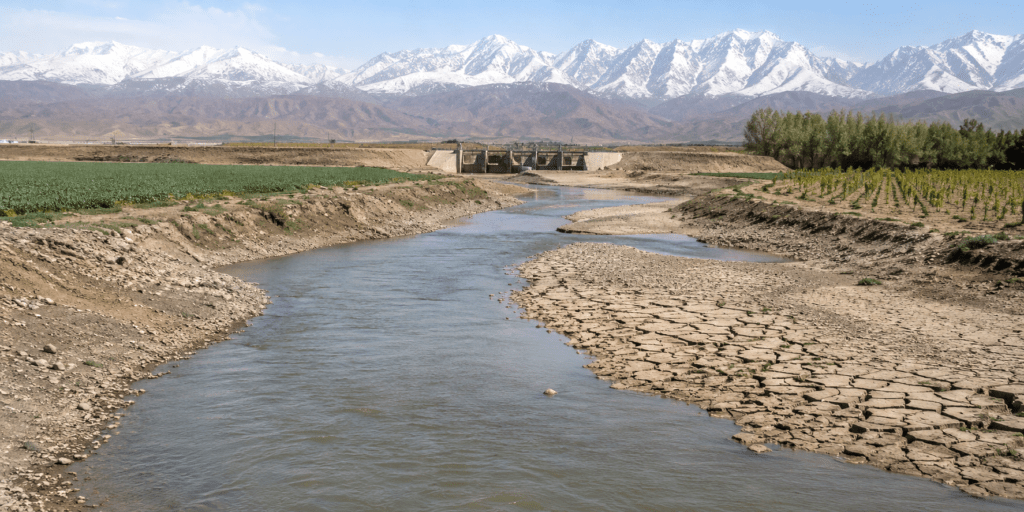
Opinion: Water Without a Guarantor – Central Asia’s Next Security Test
The Fourth High-Level International Conference on the International Decade for Action, “Water for Sustainable Development,“ taking place in Dushanbe on May 25-28, comes at a difficult moment. Central Asia's water problem is no longer only about environmental management; it is moving into the field of regional security. The conference agenda is familiar and necessary: climate, investment, innovation, transboundary cooperation, and the implementation of the Water Action Decade. The harder question is what happens outside the conference hall. Does Central Asia still have a credible way to stop water stress from becoming an interstate crisis? For decades, the region operated in a post-Soviet setting in which Moscow shaped many security calculations, even though it was never a formal water arbiter. That setting has weakened. Russia has not disappeared from Central Asia, and it still retains military, economic, and institutional leverage. But since 2022, its role as the assumed external stabilizer has become less convincing. The result is not a simple vacuum. It is a more awkward reality: a region with many outside actors, but no trusted water-security guarantor. The Old Backdrop Is Weakening Central Asia's water system was built around a Soviet-era division of functions. Upstream republics, Tajikistan and Kyrgyzstan, controlled the mountains, reservoirs, and hydropower potential. Downstream republics, Uzbekistan, Kazakhstan, and Turkmenistan, depended on seasonal water flows for agriculture, food security, and social stability. The Soviet system managed those tensions through central planning. After independence, cooperation became more fragile. Water, energy, borders, electricity, and agriculture were separated into national strategies. The rivers, however, remained transboundary. For many years, Russia remained the largest external power around which regional security calculations were organized. That did not make Moscow an effective water manager, but it helped shape the political environment. Today, that environment has changed. The CSTO did not prevent the Kyrgyz-Tajik border escalations of recent years. Kyrgyzstan and Tajikistan eventually reached a border agreement through direct negotiation rather than outside enforcement. That difference is not academic. Water disputes are rarely settled by conferences alone. They need trusted channels for mediation, compensation, and restraint when pressure builds. Central Asia has plenty of statements about cooperation. It has fewer tools for managing coercion when water becomes scarce. Three Pressure Points The region's water-security stress is already visible in three places. The first is Afghanistan's Qosh-Tepa Canal. The canal draws water from the Amu Darya, a river system critical for Uzbekistan and Turkmenistan. Because Afghanistan was not part of the old Soviet water-allocation arrangements, the Taliban government is creating a new upstream reality outside the inherited regional framework. Estimates of the canal's downstream impact vary widely. Some analyses suggest it could divert between 15 and 30% of the Amu Darya's flow, depending on the completion timeline, irrigation efficiency, and water-management practices. The Times of Central Asia previously reported that reduced Amu Darya flows could indirectly affect Kazakhstan if Uzbekistan compensates by drawing more heavily on the Syr Darya. Carnegie has described the Qosh-Tepa as a serious test for regional water cooperation. The second pressure point is Uzbekistan's turn toward small hydropower and water-energy adaptation. Tashkent is trying to reduce energy stress while managing water constraints. The World Bank has supported Uzbekistan's efforts to expand small hydropower, including projects on existing irrigation canals. That is a rational policy, as small hydropower can generate electricity without the same political weight as large dams. But it also shows how policy is changing. States are adapting on their own to water and energy stress. Even sensible projects can create downstream anxiety if they change timing, flow management, or perceptions of control. In water politics, perception can count almost as much as hydrology. The third pressure point is upstream hydropower in Tajikistan and Kyrgyzstan. Tajikistan's Rogun hydropower project, historically a source of tension with downstream Uzbekistan, is now developing in a more accepting regional climate. It is designed to address chronic winter electricity shortages and strengthen national energy security. The World Bank has backed the project with financing, saying Rogun could help provide more reliable electricity for millions of people in Tajikistan. At the same time, Rogun remains sensitive. Any major upstream project raises questions for downstream users about reservoir filling and long-term flow management. Kyrgyzstan's Kambarata-1 project has a different political structure because Kazakhstan and Uzbekistan are involved in its development framework. The World Bank notes that the Kyrgyz Republic, Kazakhstan, and Uzbekistan signed a ministerial agreement in 2024 to collectively pursue the project. That makes Kambarata-1 a potential model for cooperation rather than conflict. It also confirms the larger point: water-energy infrastructure is becoming central to regional security. Many Actors, No Guarantor Central Asia does not lack outside attention. It has plenty. Russia remains present, but its role as the uncontested regional manager has weakened. China dominates economically and has deep interests in stability, transport corridors, and investment protection. But Beijing is cautious about becoming a political arbiter in local water disputes. Türkiye is expanding its role through the Organization of Turkic States, defense cooperation, and cultural diplomacy, but it does not have the mandate or capacity to manage water conflicts. The United States and the European Union engage through C5+1, climate, connectivity, and development formats, but they are too distant to function as hard security guarantors. That leaves a serious gap. If a water crisis becomes a diplomatic dispute, there are channels for discussion. If it becomes a financing problem, there are development banks. If it becomes a technical question, there are experts. But if water stress becomes coercive, and states accuse each other of withholding flows, damaging agriculture, or threatening food security, it is unclear who can compel restraint. That is the meaning of water without a guarantor. Scenarios for the Next 6-12 Months The most likely outcome is not a major interstate spat. It is a gradual rise in local water stress, sharper rhetoric, and more frequent disputes around reservoirs, irrigation, energy releases, and border communities. A more serious scenario would combine a dry season with electricity shortages, food price pressure, and accusations over upstream or downstream behavior. In that case, governments may use water language to mobilize domestic opinion, even if they still avoid open confrontation. The escalation scenario is less likely, but more dangerous. A local incident near a border, canal, reservoir, or irrigation zone could combine with drought, social frustration, and weak arbitration. The danger would not be water alone. It would be water plus food prices, energy shortages, and national security rhetoric. Central Asia has already seen how quickly local grievances can become strategic shocks. The water system is now one of the places where such shocks could emerge. Markers to Watch Five indicators will show whether Central Asia's water stress is moving toward cooperation or confrontation. First, water levels in major reservoirs, especially Toktogul in Kyrgyzstan and Nurek in Tajikistan, ahead of the winter energy season and the next irrigation cycle. Second, the pace of construction and water intake at Afghanistan's Qosh-Tepa Canal, especially if downstream states begin to describe the project in security terms. Third, official rhetoric from Uzbekistan, Turkmenistan, Kazakhstan, Kyrgyzstan, and Tajikistan. Language that frames water use as a security threat, unlawful withdrawal, or hostile pressure would signal a shift from technical disagreement to securitized politics. Fourth, the implementation of cooperative hydropower projects such as Kambarata-1. If Kazakhstan, Uzbekistan, and Kyrgyzstan can make the project work, it could become a stabilizing model. If trust breaks down, it will become another warning sign. Fifth, the response of outside actors to water-linked incidents. If Russia, China, the OTS, the EU, and the U.S. limit themselves to statements, the region will learn that no outside actor is prepared to enforce restraint. The Real Test Central Asian governments increasingly speak in terms of sovereignty. That is understandable. Each state wants control over its resources, energy future, food security, and infrastructure. But water sovereignty has a paradox. No Central Asian state can secure water alone. Upstream states need electricity and development. Downstream states need irrigation and agricultural stability. Afghanistan is entering the equation as a new upstream user. Climate pressure is making every calculation more uncertain. The Dushanbe conference is therefore important. It also exposes the gap between diplomacy and enforcement. Central Asia does not lack water forums. It lacks a credible mechanism for preventing water stress from becoming a security crisis. The region is not destined for the once-projected water wars, but it is entering a period in which water will become a stronger trigger for political pressure, domestic instability, and interstate suspicion. That is the test: not whether Central Asia can speak about cooperation in Dushanbe, but whether it can build a system that still works when the rivers run low. The views expressed in this article are those of the author and do not necessarily reflect the official policy or position of the publication, its affiliates, or any other organizations mentioned.
Sunkar Podcast
Kazakhstan to Host 2027 Table Tennis World Championships